

Last updated September 20, 2026
Free on-site gate assessment - hinges, posts, and your LiftMaster or Nice gate operator checked before anything is quoted
The assessment is free and the quote is the invoice.
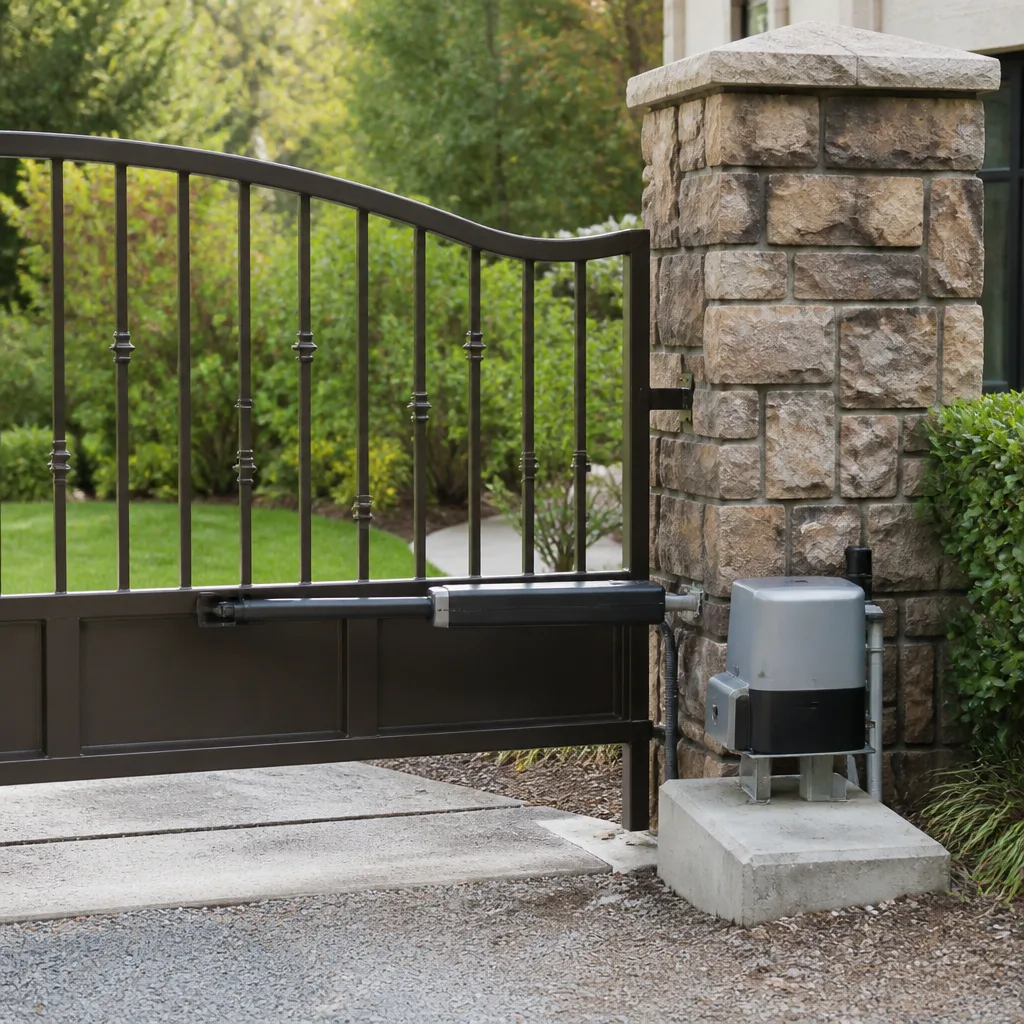
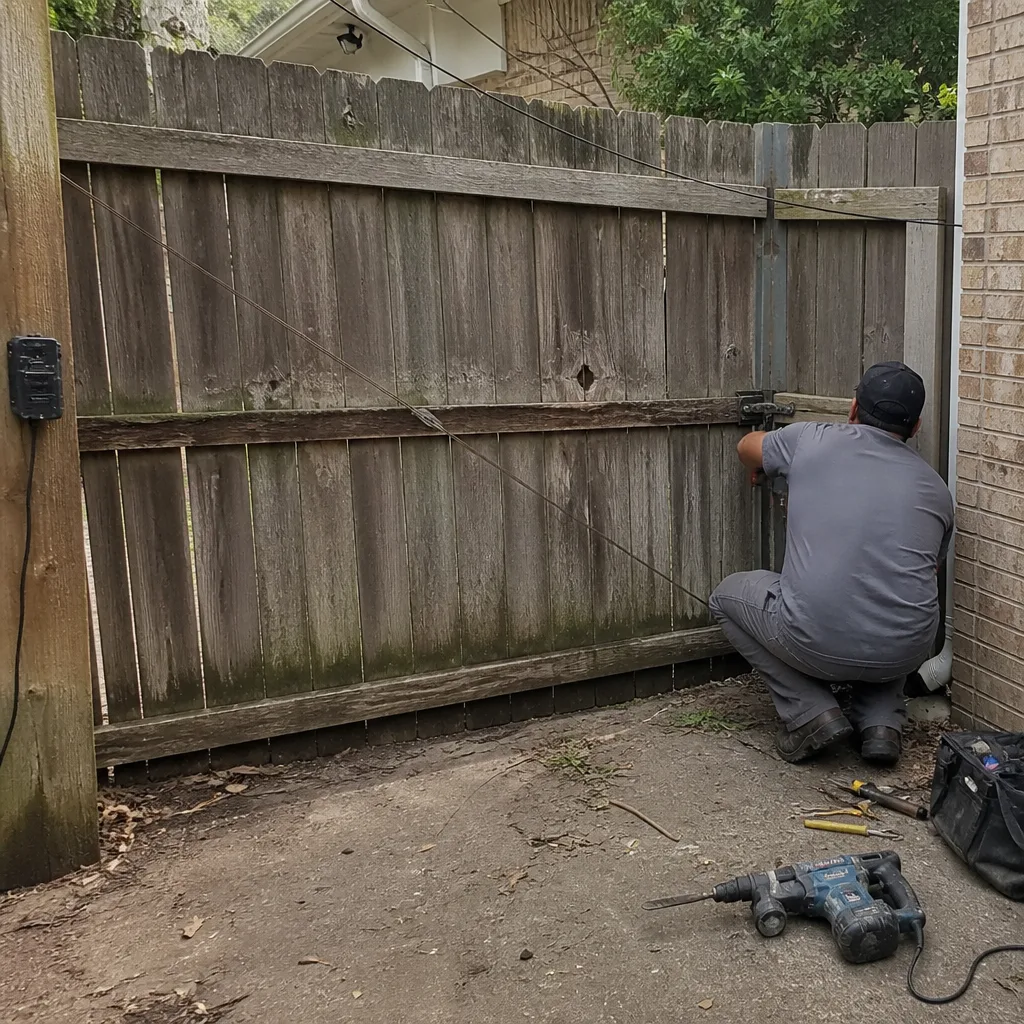 Before
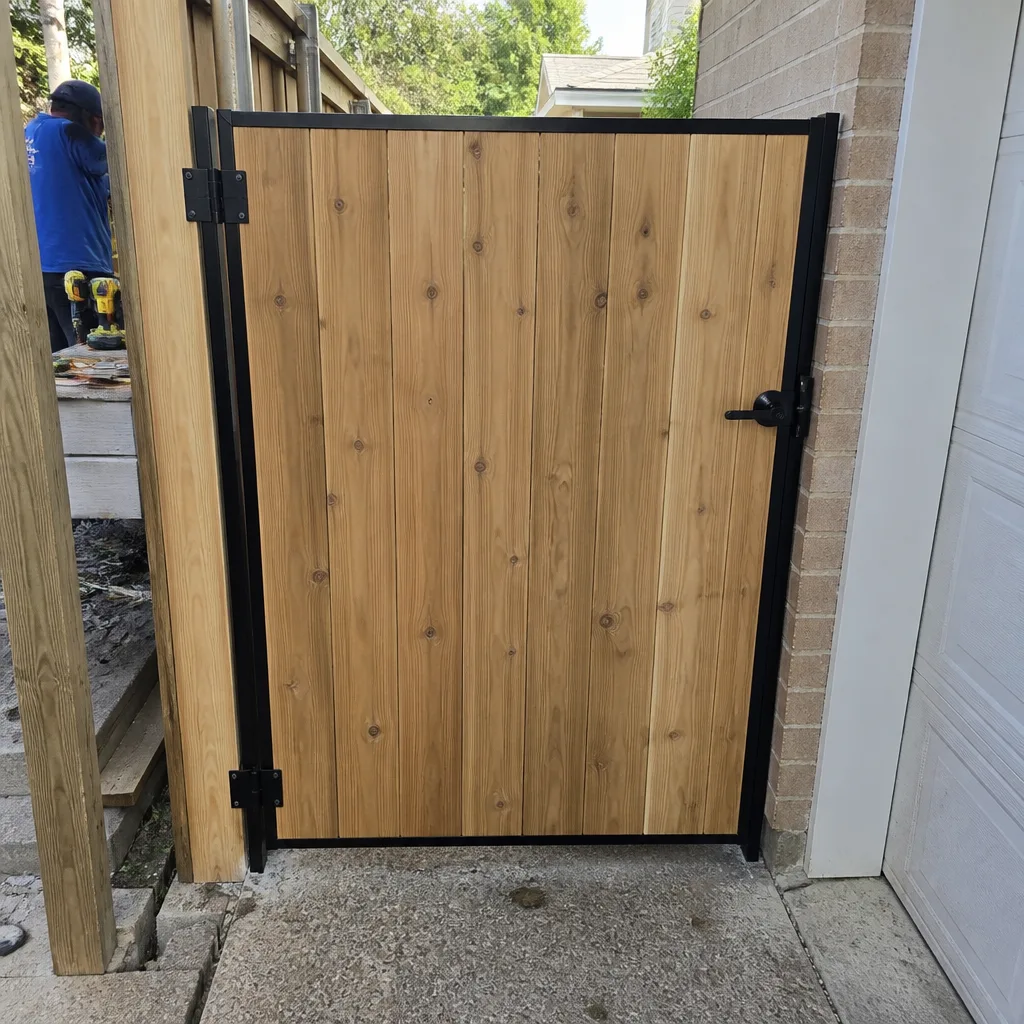 After
After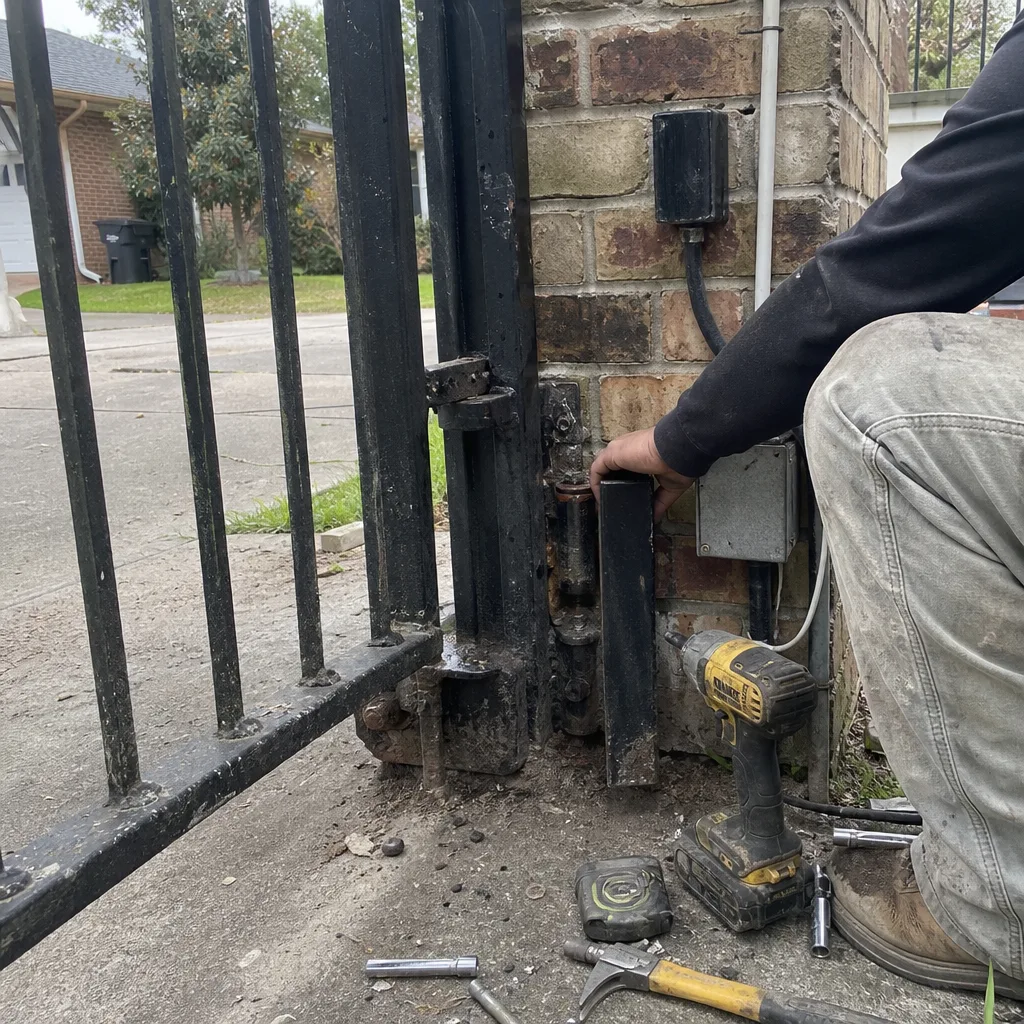 Before
 After
After Before
 After
AfterGate Repair Cost Breakdown: The League City Homeowner’s Reference for 2026
The same gate operator replacement that costs $680 from one League City company costs $1,340 from another. The parts didn’t cost more. The labor didn’t take longer. The difference is that the second company knows most homeowners have no reference point, no written itemization, and no way to tell a legitimate charge from a padded one. This guide fixes that. By the time you finish reading, you’ll know what each common Gate Repair services should cost in League City in 2026, which invoice line items are legitimate, which ones are padding, and how to read an estimate the way a technician reads one.
Quick Answer
Most gate repairs in League City run between $185 and $950 in 2026, with hinge replacements at the low end ($185-$425), operator motor swaps in the middle ($480-$1,050), and full control board replacements at the high end ($560-$1,400). For a deeper dive, see our Gate Repair Maintenance Checklist for League City Homeowners. The single biggest variable is whether the company prices from a written parts-and-labor schedule or quotes verbally on-site. A written, itemized estimate is the single most reliable indicator of an honest price in this market.
Table of Contents
- The Eight Most Common Gate Repairs in League City, Priced
- How to Read a Gate Repair Invoice: Legitimate Line Items vs. Padding
- Written Estimates vs. Verbal Estimates: What Vague Language Actually Costs You
- Repair vs. Replace: The Real Math on Gate Age and Failure Type
- What Documentation Changes About the Real Cost of a Repair
- League City-Specific Factors That Affect Gate Repair Pricing
- Common Mistakes to Avoid
- When to Call a Professional
- Frequently Asked Questions
- The Bottom Line
BeforeAfterThe Eight Most Common Gate Repairs in League City, Priced
These are the repairs we see week after week across League City, from South Shore Harbour to Hidden Lakes to Westwood. Each price range reflects 2026 parts costs and typical labor time for a single technician. The ranges assume a standard residential swing or slide gate in serviceable condition. If your gate has been hit by a vehicle, has rust at the hinge welds, or was installed before 2010, expect to land at the upper end or slightly above.
1. Hinge Replacement: $185-$425
Gate hinges fail slowly, then suddenly. What starts as a sag you can correct by lifting the latch end becomes metal fatigue at the weld point, and in League City’s salt-adjacent air, that fatigue accelerates. A standard pair of weld-on or bolt-on hinges runs $40-$120 for the parts, and labor is usually 1.5 to 3 hours including removal, alignment, and touch-up paint. The price gap between $185 and $425 comes down to gate weight: a light ornamental driveway gate is quick, a heavy steel estate gate requires blocking, lifting equipment, and more weld time.
2. Gate Operator (Motor) Replacement: $480-$1,050
This is the repair where League City pricing gets genuinely unpredictable. A replacement swing-arm operator from a mid-tier brand like Mighty Mule or Ghost Controls retails between $280 and $520, and the labor to remove the old unit, mount the new arm, set the limit switches, and test the cycle takes two to three hours. That puts a fair installed price at $480 to $820 for most residential gates. Heavier slide gates, or operators from brands like Viking or Elite that cost more upfront, push toward the $1,050 mark. The red flag to watch for: a quote above $1,100 for a standard residential swing operator replacement, with no explanation of what justifies the premium.
3. Control Board Replacement: $560-$1,400
Control boards fail for three reasons in League City: power surges from Gulf thunderstorms, ant colonies shorting the relay contacts (this is more common than you’d believe), and age-related capacitor degradation. The board itself typically runs $150-$480 depending on the brand, and replacement labor, including reprogramming all limits, remotes, and safety inputs, runs two to four hours. A $560 job is a basic single-gate board without accessories. A $1,400 job involves a newer smart-enabled board, multiple accessory integrations, and a full reprogramming sequence.
4. Wiring Harness Replacement: $220-$520
Wiring harness failures cluster in two League City scenarios: gates where underground conduit was never properly sealed, and gates within a half-mile of Clear Creek or Galveston Bay, where moisture intrusion accelerates insulation breakdown. Replacing a harness means pulling new multi-conductor cable from the operator to the keypad, photo-eyes, and any safety loops. The parts are cheap, typically $40-$90 for the cable and connectors. The labor is the cost: trenching or fishing through existing conduit takes one to three hours, and every splice point is a future failure point if not done with proper waterproof connectors.
5. Limit Switch Replacement or Adjustment: $135-$260
When a gate stops opening all the way, or reverses at the wrong point, the limit switch is often the culprit. This is one of the cheapest repairs in the trade, which is why it’s also one of the most misdiagnosed. A replacement limit switch assembly costs $25-$70, and setting it correctly takes 45 minutes to two hours depending on the operator type. Some companies charge $300+ for this repair by wrapping it in a “tune-up” package. The work itself is straightforward, but on high-tension gate systems, particularly slide gates with significant mass, incorrect limit settings can cause the gate to over-travel and damage the rack or the operator mount. This is not a casual DIY adjustment.
6. Battery Replacement (Solar and Backup): $110-$310
Solar gate systems use a pair of sealed lead-acid or lithium batteries that typically last two to four years in League City’s heat. A quality replacement pair costs $60-$140, and the labor is usually under an hour including testing the charge controller and confirming the solar panel output. The higher end of this range covers lithium upgrades and systems with backup battery boxes that need corrosion cleanup. If you’re being quoted more than $350 for a residential battery replacement, ask for the specific battery part number and price it yourself before approving.
7. Loop Detector Replacement: $310-$590
Loop detectors are the hidden workhorses of automatic gates, sensing vehicle presence through a wire loop buried in the driveway. When the detector fails, the gate either won’t open for vehicles or, in a dangerous failure mode, won’t hold open while a vehicle passes. The detector unit itself is $120-$280, and the labor includes diagnosing whether the failure is in the detector or the buried loop itself, then replacing and re-tuning as needed. Loop work requires a licensed low-voltage contractor in many League City jurisdictions, and the buried loop portion of the system has a finite lifespan, typically 5 to 10 years before the wire insulation degrades in our soil conditions. For details on local requirements, read our guide to Gate Repair Permits, Codes & Inspections in TX: What You Need to Know.
8. Post Realignment or Replacement: $350-$1,100
Gate posts lean. In League City, where the soil is predominantly clay and shifts dramatically through wet-dry cycles, posts installed in the 2000s and early 2010s are showing measurable drift. A simple realignment, where the post is still structurally sound, runs $350-$650 including resetting the gate and adjusting the operator. A full post replacement, typically needed when the steel has corroded below grade or the concrete footer has cracked, runs $800-$1,100 with new concrete, curing time, and gate re-hanging. This is not the repair to defer: a leaning post puts constant stress on hinges, operators, and latch hardware, and every month of deferred repair adds to the eventual bill.
How to Read a Gate Repair Invoice: Legitimate Line Items vs. Padding
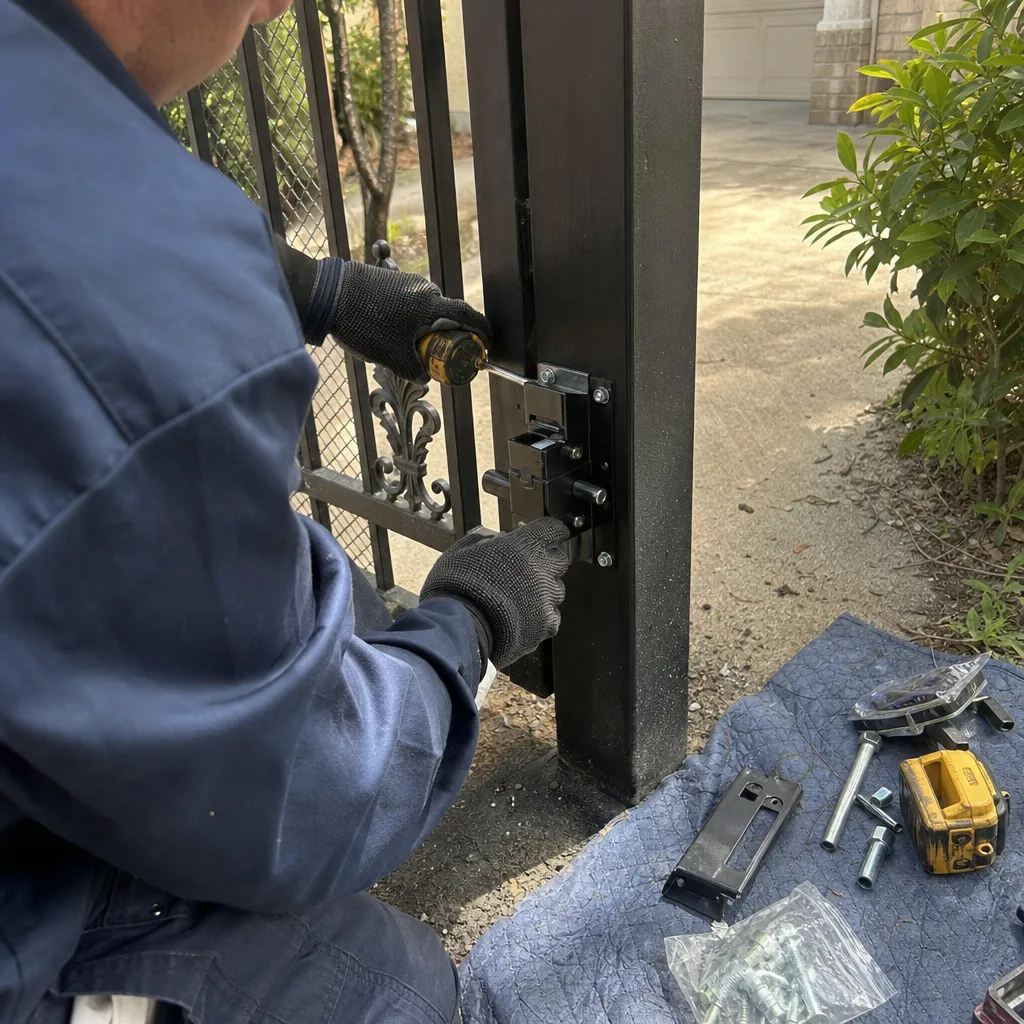
Most homeowners don’t know which line items on a gate repair invoice are real and which ones exist to inflate the total. Here’s the honest breakdown, written from the technician’s side of the clipboard.
Legitimate Line Items
- Diagnostic fee (when waived with repair): A reasonable company charges $45-$95 to diagnose a gate problem, then credits that amount toward the repair if you proceed. The fee covers the technician’s time and the company’s cost of dispatching. It is legitimate. A company that charges it and does not credit it toward the repair is making you pay twice.
- Trip fee: $25-$60 is defensible in League City, particularly for calls outside the immediate Clear Creek corridor. This covers fuel, vehicle maintenance, and travel time. It should be disclosed before dispatch, not added as a surprise at the end.
- Parts: This should be a specific line item with a part number or at minimum a clear description. “Operator motor, LiftMaster LA400” is legitimate. “Gate motor parts” is not.
- Labor (itemized with hours): Labor should be billed as units of time against a stated hourly rate. If the invoice says “labor: $400” with no rate and no hours, ask for both.
Padding You Should Question
- “Material handling charge”: Some companies add 10-18% on top of parts cost for “handling.” Parts distributors deliver to the shop. This fee is almost never legitimate for a repair that doesn’t require a special order, and even then it should be disclosed in advance.
- Warranty markup: An item labeled “extended warranty” or “service guarantee fee” that adds $100-$300 to a standard repair is padding. A legitimate company covers its work under a stated warranty as a cost of doing business, not as a line item on your invoice.
- “Shop supplies” exceeding $15: A small shop-supplies charge ($8-$15) covers wire nuts, zip ties, electrical tape, and cleaning materials. A $60 shop-supplies charge on a hinge replacement is padding.
- Diagnostic time billed twice: If the invoice shows “diagnostic” as a line item and also shows inflated labor hours that include diagnosis time, you’re paying for that hour twice. Ask to see the time log.
At Vance Gate Repair League City home, every invoice shows parts, labor hours, and rate as separate lines. The price is written and handed to you before the first tool comes out, so there’s no invoice reading required after the fact.
Written Estimates vs. Verbal Estimates: What Vague Language Actually Costs You
A verbal estimate is a number spoken in a driveway. A written estimate is a document with line items, scope of work, and a total. The difference between the two is the difference between a quote and a guess.
Here’s what “repair as needed” means on a written estimate: it means the company has reserved the right to expand the scope and the price after the job starts. You might be quoted $400 for a hinge adjustment and end up with a $900 invoice because “as needed” turned out to include a new operator bracket, a limit switch, and a service call to re-adjust everything two weeks later. None of those outcomes are wrong. All of them should have been visible before the job started.
How to Read an Estimate in Four Steps
- Look for a scope line. It should say what will be done: “Remove operator arm, replace with [brand and model], set limits, test full cycle, photograph final configuration.” If the scope is one vague sentence, ask for detail before signing.
- Check for exclusions. A legitimate estimate says what’s not included: “Does not include concrete repair at post base” or “Does not include new remote controls.” Exclusions are a sign of an honest estimator. A company that implies everything is included often intends to charge for the extras later.
- Verify the total. Add the line items. If the total doesn’t equal the sum of parts plus labor, the estimator made a math error or there’s a hidden line item somewhere.
- Ask what happens if the repair doesn’t hold. The answer should be a warranty period in days or months with a clear statement of coverage. If the answer is vague, treat it as no warranty.
Vance Gate Repair operates under Clause 1 of The Haven Standard: the flat price is written and handed over before any work starts. No verbal-only pricing, no “estimate subject to change,” no scope expansion without a new written approval.
Repair vs. Replace: The Real Math on Gate Age and Failure Type
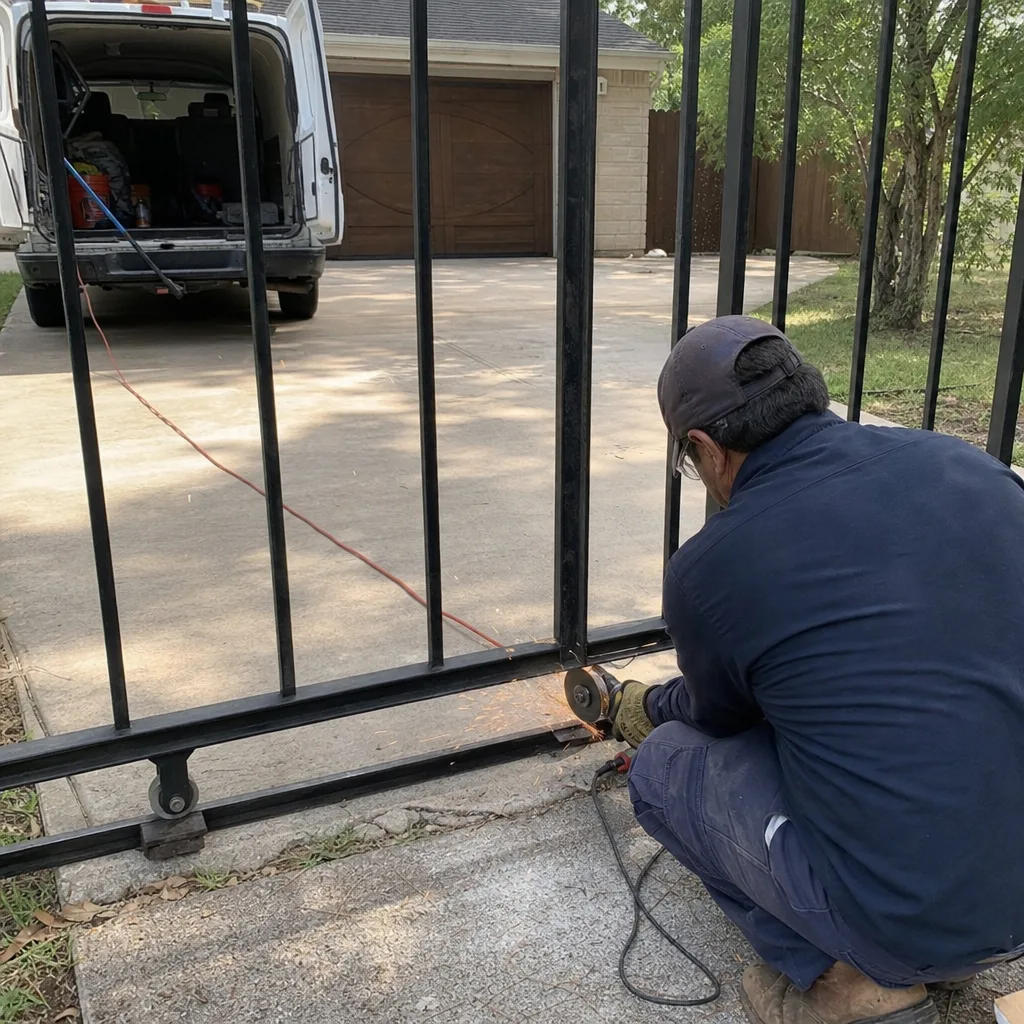
The decision to repair a component or replace it isn’t about what’s cheaper today. It’s about what’s cheaper over the next five years. Here’s the practical math we use with League City homeowners.
Repair Makes Sense When:
- The gate itself is under 12 years old and the structure is sound. A 2016-era gate with a dead operator motor is a repair, not a replacement project.
- The failure is isolated. One limit switch, one photo-eye, one battery set. When the rest of the system is functioning and the operator shows no signs of stress, fix the single point of failure.
- The repair cost is under 40% of replacement cost. If a new operator installed is $900 and the repair is $300, repair it. If the repair is $600, consider that you’re spending two-thirds of new-equipment money to extend an aging component.
Replacement Makes Sense When:
- The gate is 15+ years old and showing multiple simultaneous failures. A control board that fails six months after a motor replacement, then a keypad that dies a month after that, is a system telling you it’s reached end of life.
- The repair requires disassembly that exposes additional failures. If a hinge replacement requires removing the operator anyway, and the operator is 12 years old, the marginal cost to replace the operator while everything is apart is lower than a separate service call later.
- Parts are discontinued. Several brands discontinued pre-2015 control boards, and sourcing them now means buying used or rebuilt units at premium prices. When the repair costs more than a new operator with a warranty, the decision makes itself.
For a full breakdown of what replacement involves, see our guide to Gate Installation in League City, which walks through the entire process from site assessment to final testing.
What Documentation Changes About the Real Cost of a Repair
Here’s the part most cost guides miss: the price on the invoice is not the real cost of the repair. The real cost includes what happens the next time the gate fails.
A $800 repair with no documentation means the next technician starts from zero. They don’t know what part was installed, what the limit switch was set to, which wires were spliced, or what was adjusted. They spend an hour rediscovering what the previous technician already found. You pay for that hour. Now multiply that across every future repair on that gate.
A $900 repair with a documented record, wiring diagram, and photo log means the next technician opens the file and sees exactly what was done. They skip the rediscovery. They go straight to the actual problem. The $100 difference bought you a permanently lower cost of ownership.
This is the entire reason Vance Gate Repair leaves a photographed record on every single visit, a practice that comes from Adrian Vance’s commercial access-control days starting in 2014. In commercial work, documentation is not optional. It’s contractually required. Residential customers deserve the same discipline, which is why Clause 4 of The Haven Standard mandates a documented photo record on every job: what was found, what was adjusted, what was replaced. You get a copy. The job file gets a copy. No future technician has to guess.
When you’re comparing estimates, one of the questions worth asking is: “What will I receive as a record of this repair?” If the answer is a shrug, factor that into your real cost.
League City-Specific Factors That Affect Gate Repair Pricing
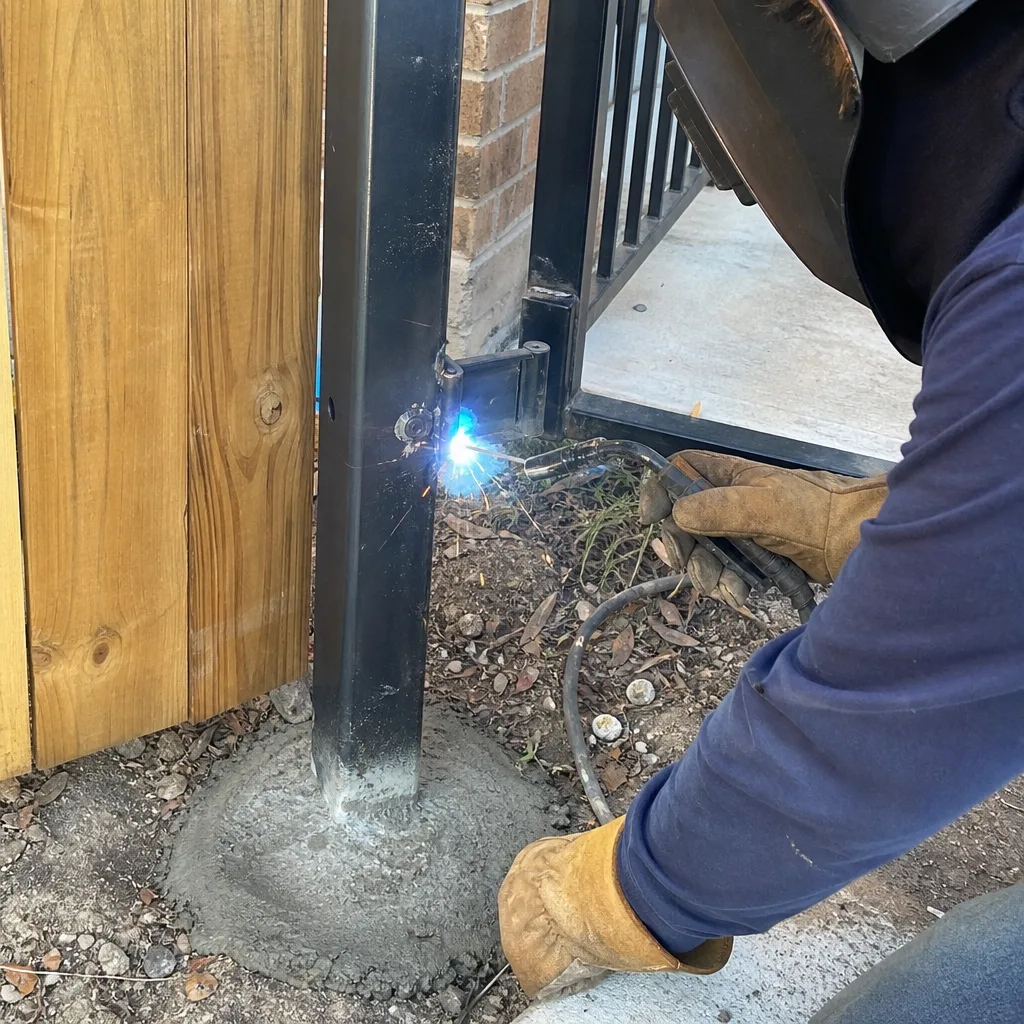
Gate repair pricing is not the same everywhere. League City has specific conditions that move costs in predictable ways. Understanding these factors helps you evaluate whether a quote is fair or inflated.
Coastal Air and Corrosion
League City sits roughly 10-15 miles from Galveston Bay, and the prevailing southeast wind carries salt air across the entire city. For gate hardware, this means accelerated corrosion on hinges, brackets, and exposed electrical connections. A hinge that would last 20 years in Austin might last 12 in League City. Repairs here more frequently involve rust mitigation, which adds time to hinge and post work. A technician who ignores corrosion in this market is setting you up for a repeat failure.
Clay Soil Movement
The soil across League City, particularly in neighborhoods west of I-45 where clay content runs high, expands and contracts through wet-dry cycles. Gate posts set in concrete footers still move when the surrounding soil heaves. This is why post realignment is a regular repair in League City but a rare one in, say, Conroe. If a company quotes a post repair without mentioning soil conditions, they haven’t done the local homework.
Storm Surge and Electrical Sensitivity
League City has mandatory evacuation zones, and many gates are wired into homes with backup power considerations. Operators with battery backup are more common here than in inland Texas cities. When a storm takes out power, the gate needs to function on battery, which means battery health is a more frequent service item. A gate that runs fine on AC power but dies on battery is not “working fine” in League City.
Permit and Code Familiarity
Some gate work in League City requires permits, particularly when it involves electrical runs from the home to the gate or when the gate is part of a new construction. A company that works regularly in League City knows which jobs trigger permit requirements and builds that into the estimate. A company that doesn’t may skip the permit, which saves money today and creates a problem at resale. For a complete overview of the gate repair landscape in this market, see our Gate Repair in League City page.
Common Mistakes to Avoid
- Accepting a verbal estimate without asking for written scope. A verbal price is a conversation, not a commitment. Without written scope, you have no way to hold the company to the price when the invoice arrives.
- Choosing the lowest bid without checking what’s excluded. The $75 difference between two hinge replacement quotes often disappears when the lower bid adds a trip fee, a diagnostic fee, and shop supplies at the end. Compare line items, not totals.
- Replacing an operator without checking gate condition first. A new motor on a misaligned gate will burn out early and the warranty may not cover it. The gate structure comes first, then the automation.
- Ignoring battery backup in a coastal market. League City homeowners who skip battery maintenance discover the problem during the first extended power outage of storm season, when every gate company is booked for weeks.
- Not asking for documentation of the repair. Every undocumented repair costs more over time because the next technician has to rediscover what was already known. Documentation is not a nice-to-have; it’s the difference between an $800 job and an $800 job that keeps costing money.
- Assuming a high quote means high quality. Price and quality are only loosely correlated in this trade. We’ve seen $1,300 operator replacements done sloppily and $600 replacements done with care. The differentiator is the written scope and the documentation, not the number on the invoice.
- Waiting until the gate won’t open at all. Gates almost always give warning signs: slow operation, unusual noise, sagging, intermittent remote response. By the time the gate is completely dead, the repair is usually more extensive and more expensive than it would have been two months earlier.
When to Call a Professional
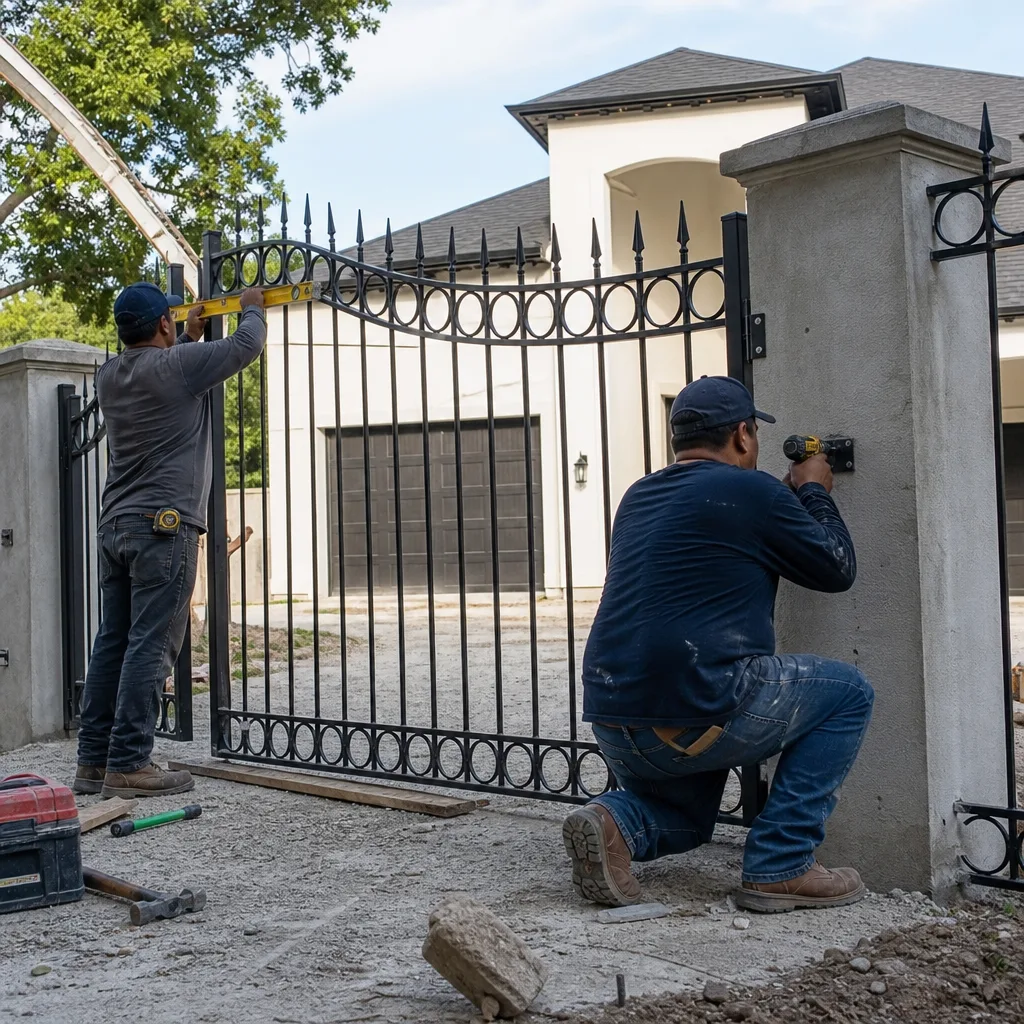
Call a professional when the gate is binding, dragging, or making noise it didn’t make last month. Call when the remote works intermittently, when the gate reverses without a vehicle present, or when the battery backup fails a test. These are early-warning indicators that a repair done now will be smaller and cheaper than one done after the failure becomes complete. Gate systems include high-tension components, heavy moving steel, and electrical equipment that can cause serious injury if handled incorrectly. A misaligned tension roller on a slide gate carries hundreds of pounds of force, and a swing gate with a broken hinge point can fall. If you’re not certain what’s wrong, don’t guess. The diagnostic visit costs less than the damage a failed DIY repair creates. Vance Gate Repair League City home offers free estimates in League City. Call (346) 787-1751 and a live person answers, any hour, every day.
Frequently Asked Questions
Most gate repairs in League City fall between $185 and $950 in 2026, with the majority of residential jobs landing in the $250-$650 range. The specific price depends on which component failed, the brand of your operator, and whether the gate structure itself needs work. Call (346) 787-1751 for an exact quote on your specific gate, estimates are free and written before any work starts.
Yes, same-day dispatch is available for gate failures in League City. The service area covers the full city, and a live person answers the phone 24/7, so you’re not leaving a voicemail and waiting for a callback. Call (346) 787-1751 and a technician can be dispatched the same day for most repair calls.
A gate operator motor replacement in League City typically runs $480 to $1,050 installed, depending on the brand and whether the arm bracket and mounting hardware are intact. Brands like Viking, Ghost Controls, Elite, and DoorKing are all serviceable with their own parts costs and labor profiles, and the written estimate will itemize both. Call (346) 787-1751 for an exact quote on your operator.
A repair fixes a specific failure, a service addresses wear before it becomes a failure. In practice, most “gate service” visits in League City are preventive maintenance: lubrication, limit switch verification, battery testing, and photo-eye alignment. Repairs happen when something has already stopped working. Both have their place, and a documented service history makes future repairs faster and cheaper.
Yes, power runs from the home to the gate, low-voltage wiring, photo-eyes, and safety edges are all part of standard gate work in League City. These components are safety-critical, particularly the photo-eye that stops the gate if something crosses the path, and they must be installed and tested correctly. For more detail, see our Gate Motor & Opener in League City page. Call (346) 787-1751 for a written quote that covers the full scope.
A properly executed gate repair should hold for years, not months. The structural elements, hinges and posts, are the durable parts. The electrical components, batteries, photo-eyes, and operator internals, have finite lifespans that depend on brand, usage frequency, and coastal exposure. Under The Haven Standard, every Vance Gate Repair job is covered by the 365-Day Done Right Promise: if the repair isn’t right, it gets made right at no charge within a full year.
The Bottom Line
Gate repair pricing in League City is opaque by habit, not by necessity. Every common repair has a defensible parts cost and a labor time, and now you have those numbers. The gate operator replacement that costs $680 from one company and $1,340 from another is not a market mystery. It’s a documentation gap. Homeowners who ask for written scope, itemized pricing, and a documented record of the work pay less over the life of the gate than those who accept a verbal estimate and a handshake. Explore more guides & resources to keep your gate running smoothly. The tool to tell an accurate estimate from a padded one is now in your hands. Use it.
Written by Adrian Vance, Owner at Vance Gate Repair League City, serving League City since 2014.