

Last updated September 20, 2026
Free on-site gate assessment - hinges, posts, and your LiftMaster or Nice gate operator checked before anything is quoted
The assessment is free and the quote is the invoice.
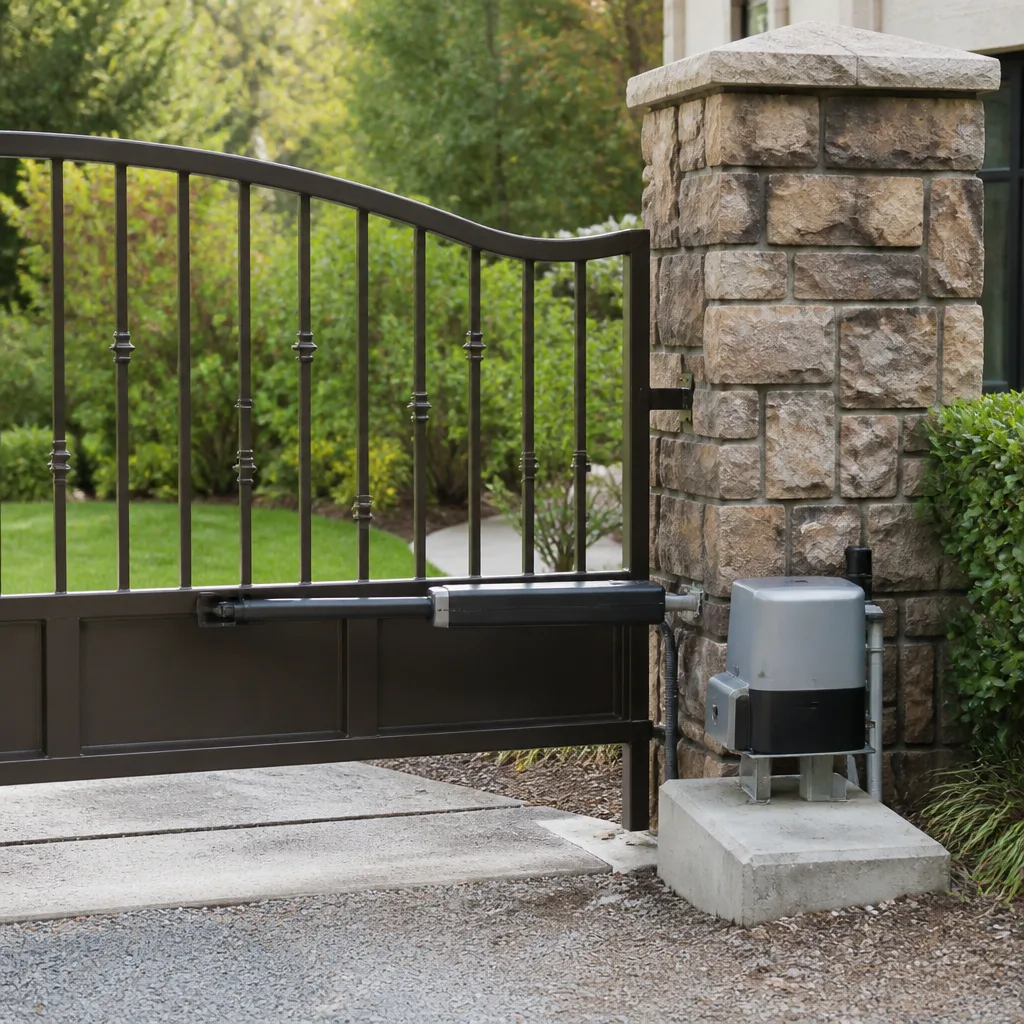
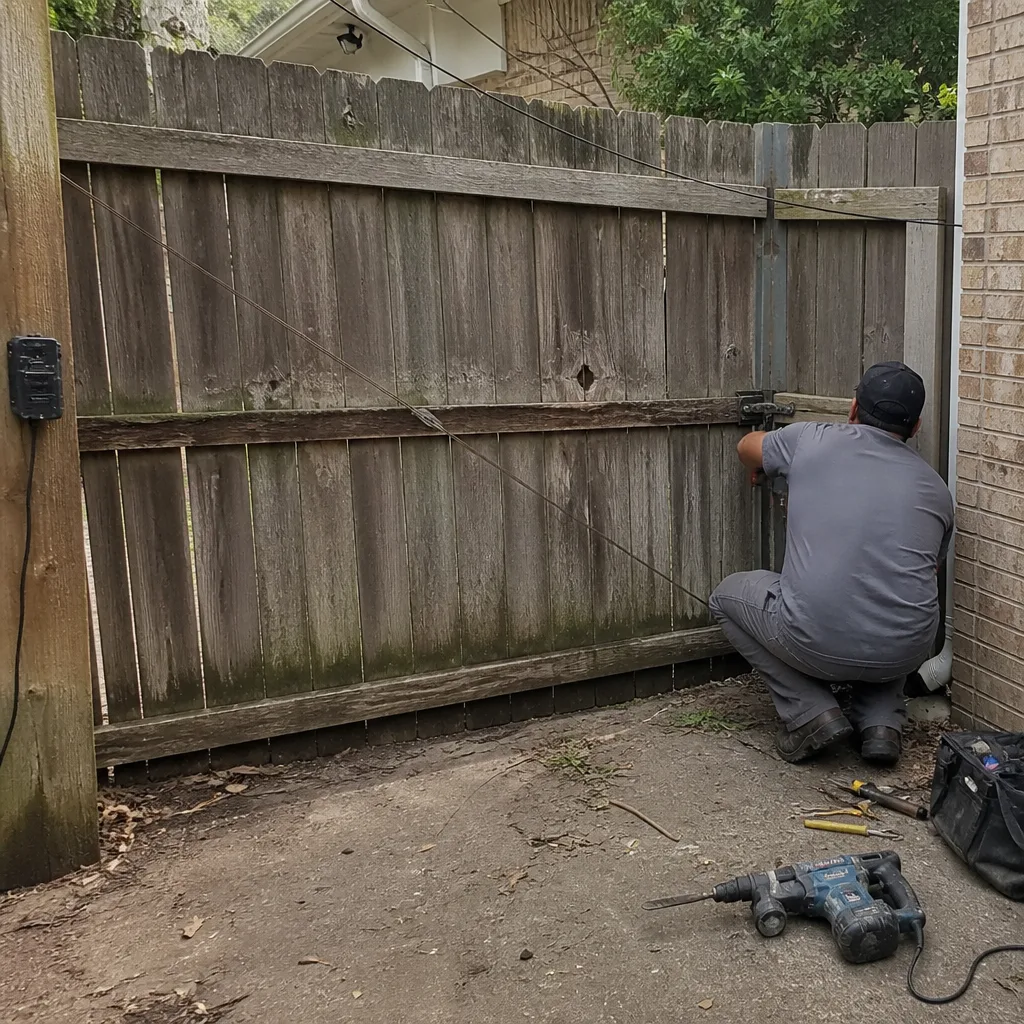 Before
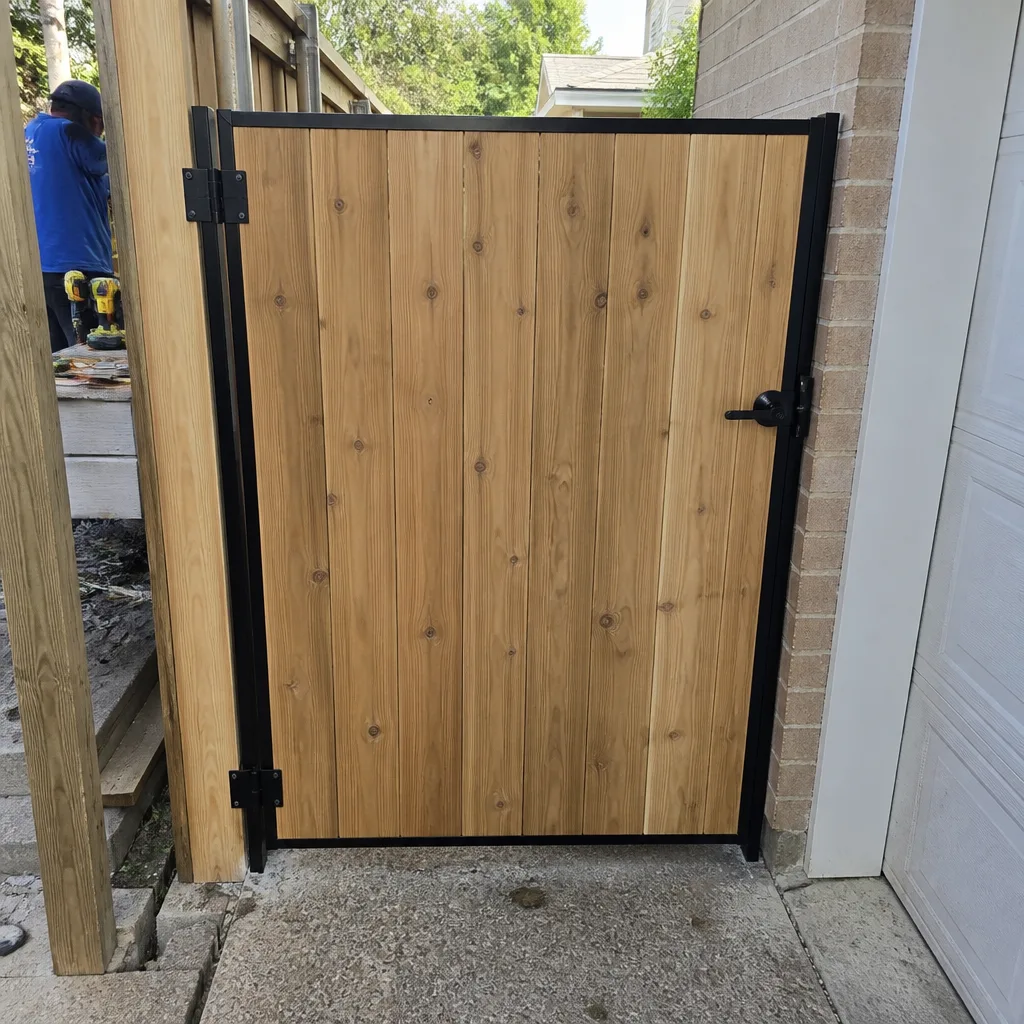 After
After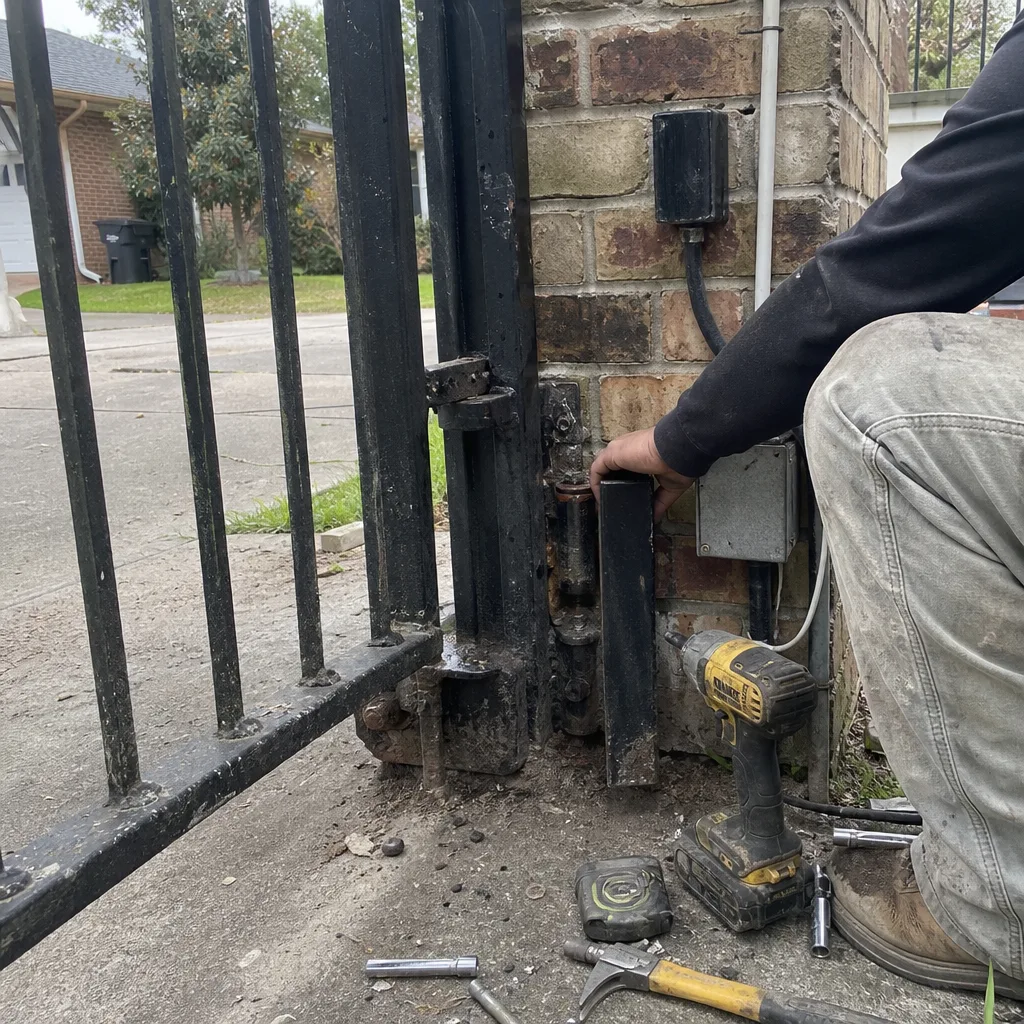 Before
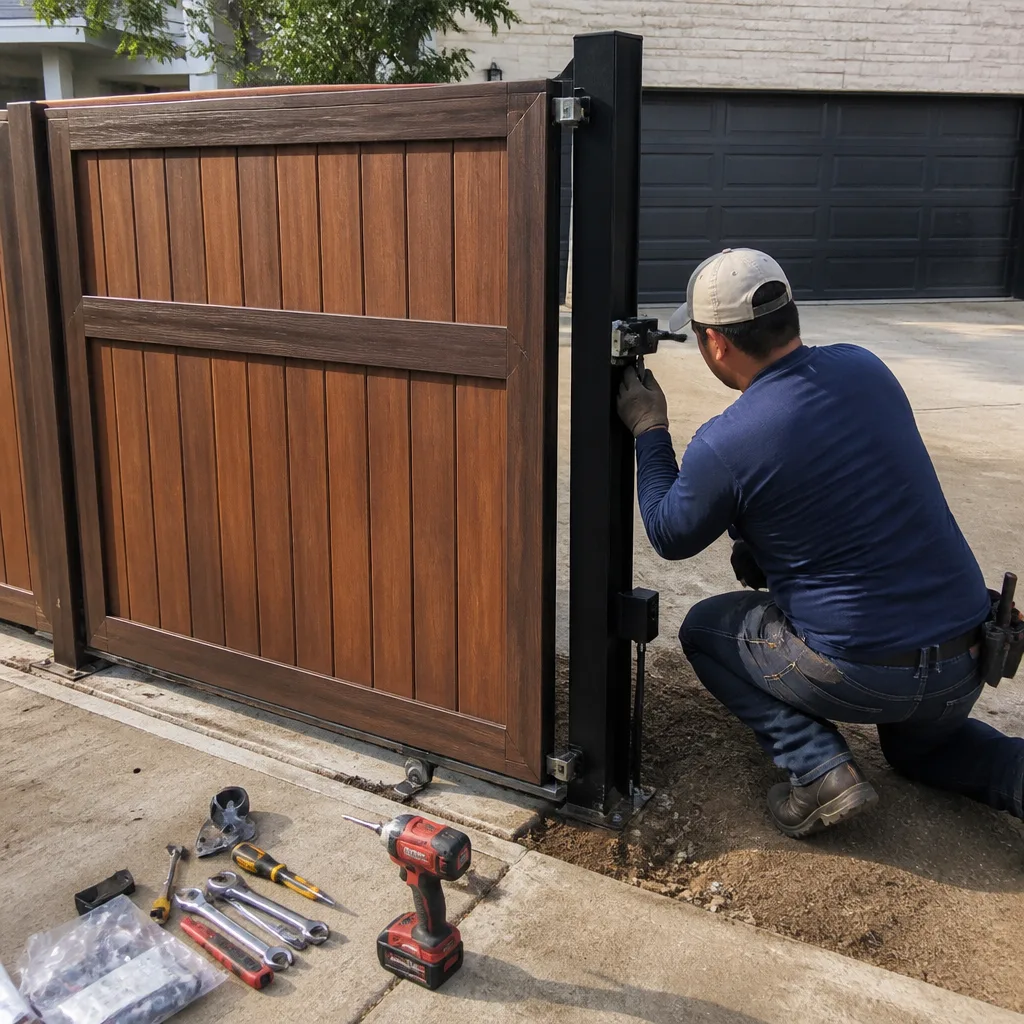 After
After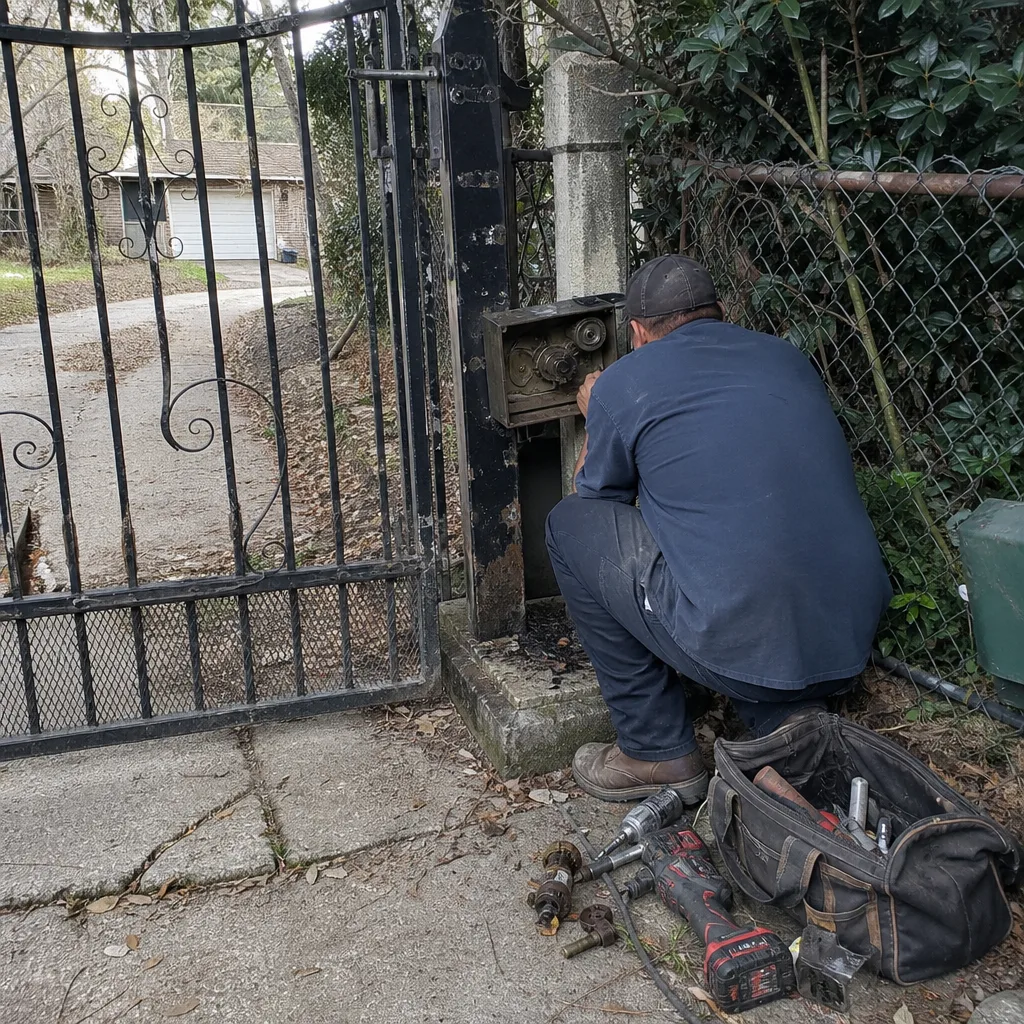 Before
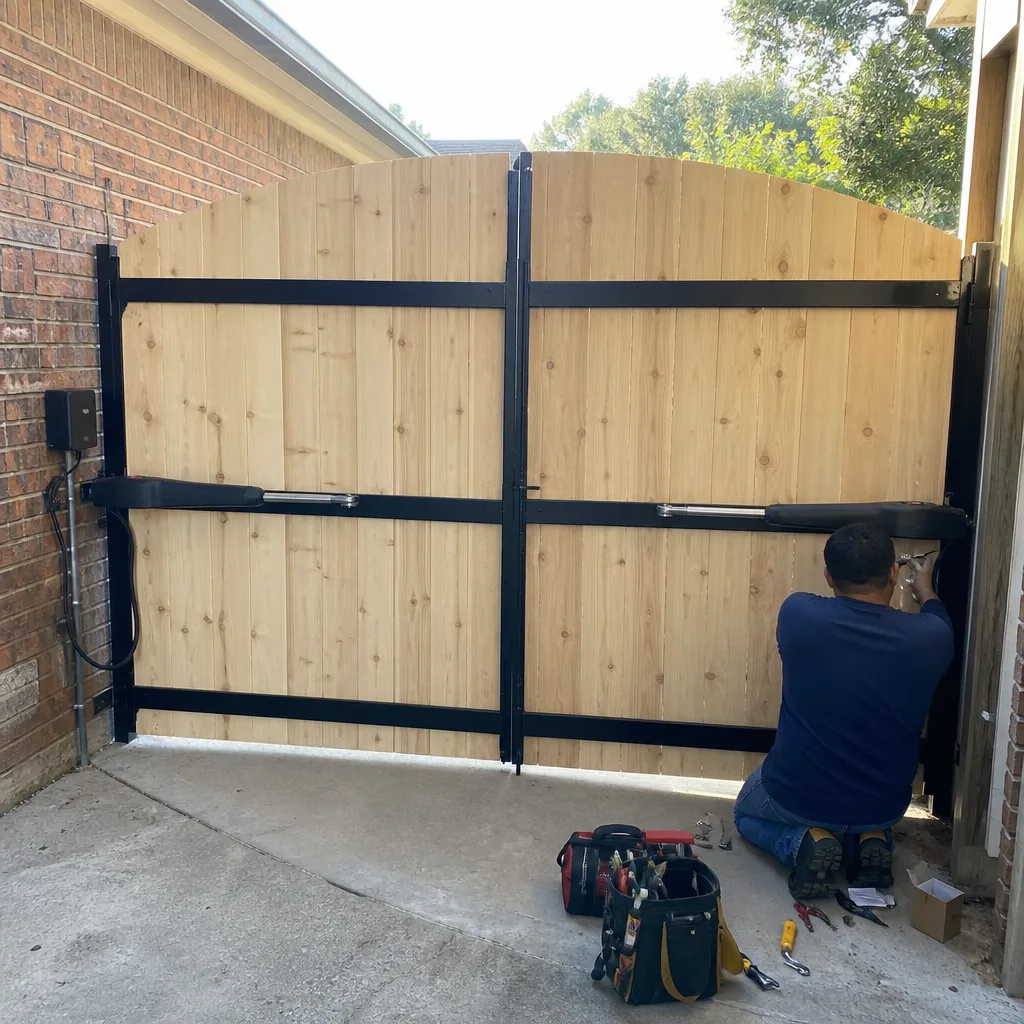 After
AfterGate Repair Warning Signs: A League City Homeowner’s Reference Guide
A gate that hesitates for two seconds before opening isn’t malfunctioning yet. It’s measuring how much longer it has before it doesn’t open at all, and that two-second pause is a more reliable warning than anything on a maintenance schedule. We’ve watched League City homeowners reset breakers, wiggle remotes, and tap control boards with a screwdriver handle, chasing the same three symptoms across different neighborhoods, Clear Creek, South Shore, Hidden Lakes, Bay Colony, Magnolia Creek, Westwood. The gate usually knows it’s failing before the owner does. This guide names the specific warnings, what each one means, what it costs to catch it early, and how to document it so a technician isn’t starting from zero when you finally call our Gate Repair services team.
Quick Answer
The earliest reliable warning signs of gate failure are a delayed start of more than two seconds after the remote or keypad activates, a motor that sounds like it’s working harder than it did last season, and visible rust pitting on hinge barrels or roller wheels. Any one of these means you have a two-to-four-week window to schedule a repair before the failure becomes total, and intermittent behavior, the gate that fails once every ten cycles, is more urgent than a gate that stopped completely because intermittent means a component is degrading, not just loose. For deeper background, see our How to Hire a Gate Repair Contractor in League City: A Step-by-Step Guide.
Table of Contents
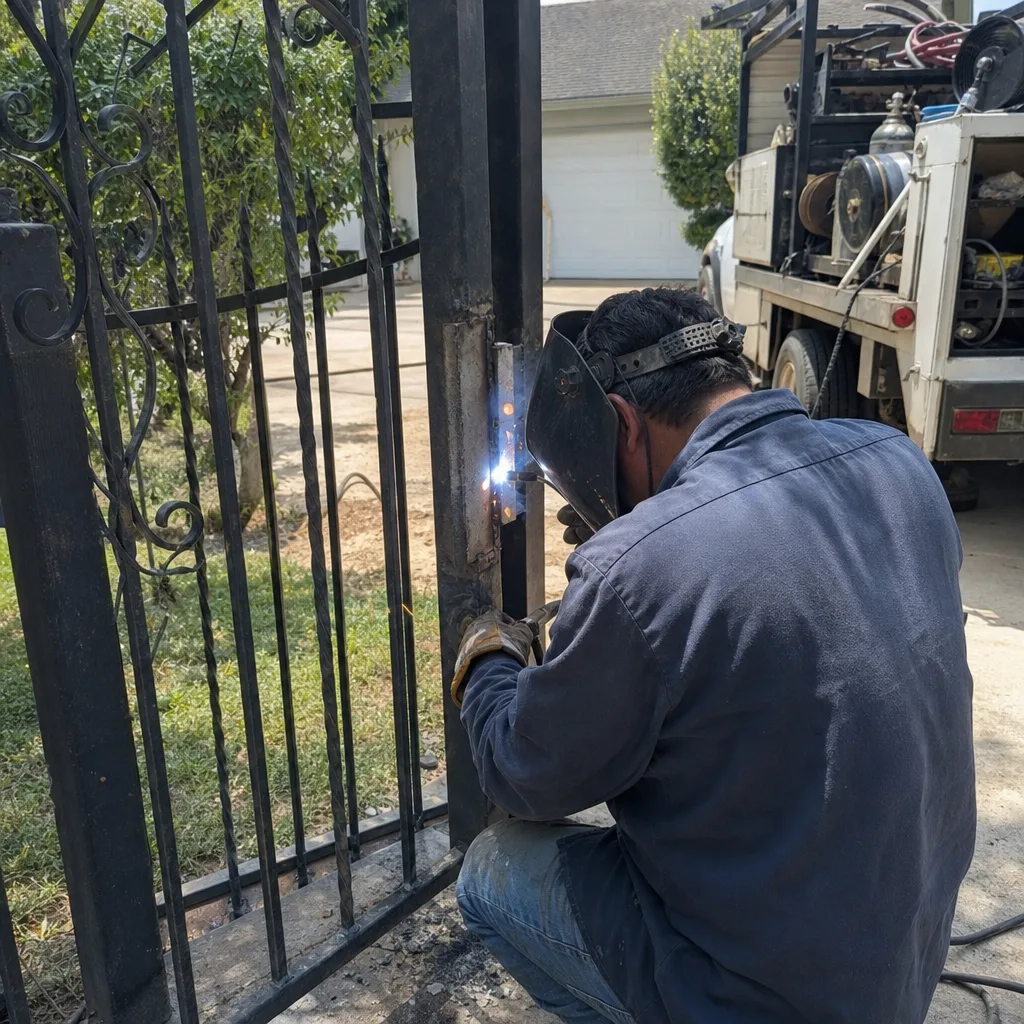
- Motor Strain Sounds: What the Motor Is Telling You
- Limit-Switch Drift: The Half-Open Gate and the Overshoot
- Hinge and Roller Wear: The 90-Day Countdown
- Intermittent Failures: Why “Sometimes It Doesn’t Open” Is the Real Red Flag
- Control Board Warning Lights and Error Codes: A Flashing Light Is Not Always an Error
- Documenting the Warning: What to Photograph and Note Before the Technician Arrives
- League City Climate and Your Gate: Humidity, Salt Air, and Soil Shift
- Common Mistakes to Avoid
- When to Call a Professional
- Frequently Asked Questions
BeforeAfterMotor Strain Sounds: What the Motor Is Telling You
A healthy gate motor produces a steady, even hum. It doesn’t change pitch. It doesn’t surge. It doesn’t grunt. When a League City homeowner tells us the gate “sounds tired,” that’s not a feeling, it’s a measurement, and it usually traces to one of three mechanical conditions.
First, a low growl or laboring sound that appears only in the first second of travel usually means the motor is pulling against a hinge that has started to bind. The motor’s torque curve spikes at startup, and the strain concentrates at the point of greatest resistance. On a swing gate, that’s almost always the bottom hinge. On a slide gate, it’s the first roller carriage or a wheel that’s flat-spotted from sitting stationary through a League City summer.
Second, a high-pitched whine that rises with gate speed, especially on a Mighty Mule or Ghost Controls swing arm, often indicates the actuator’s internal gears are shedding metal or the arm bracket bolts have loosened enough that the motor is vibrating against its own mount. The sound carries, and you’ll hear it most clearly standing beside the gate post rather than at the keypad.
Third, a clicking or snapping noise during travel usually comes from the chain or belt drive on a slide gate. The chain develops slack as the sprockets wear, and each click is the chain jumping a tooth. A DoorKing slide operator with a loose chain will keep running, and the gate will keep moving, until the chain walks off the sprocket entirely and the gate stops mid-track.
What to do: record ten seconds of the sound on your phone while the gate runs a full open and close cycle. Note whether the sound appears at startup, mid-travel, or only under load, meaning when the gate is pushing against wind or a slight incline. That clip tells a technician more than a verbal description ever could, and it costs you nothing but ten seconds. Under our documentation standard, we photograph and log the same detail, the sound source, the decibel range if it’s egregious, and the specific component making it, before any adjustment is made.
Limit-Switch Drift: The Half-Open Gate and the Overshoot
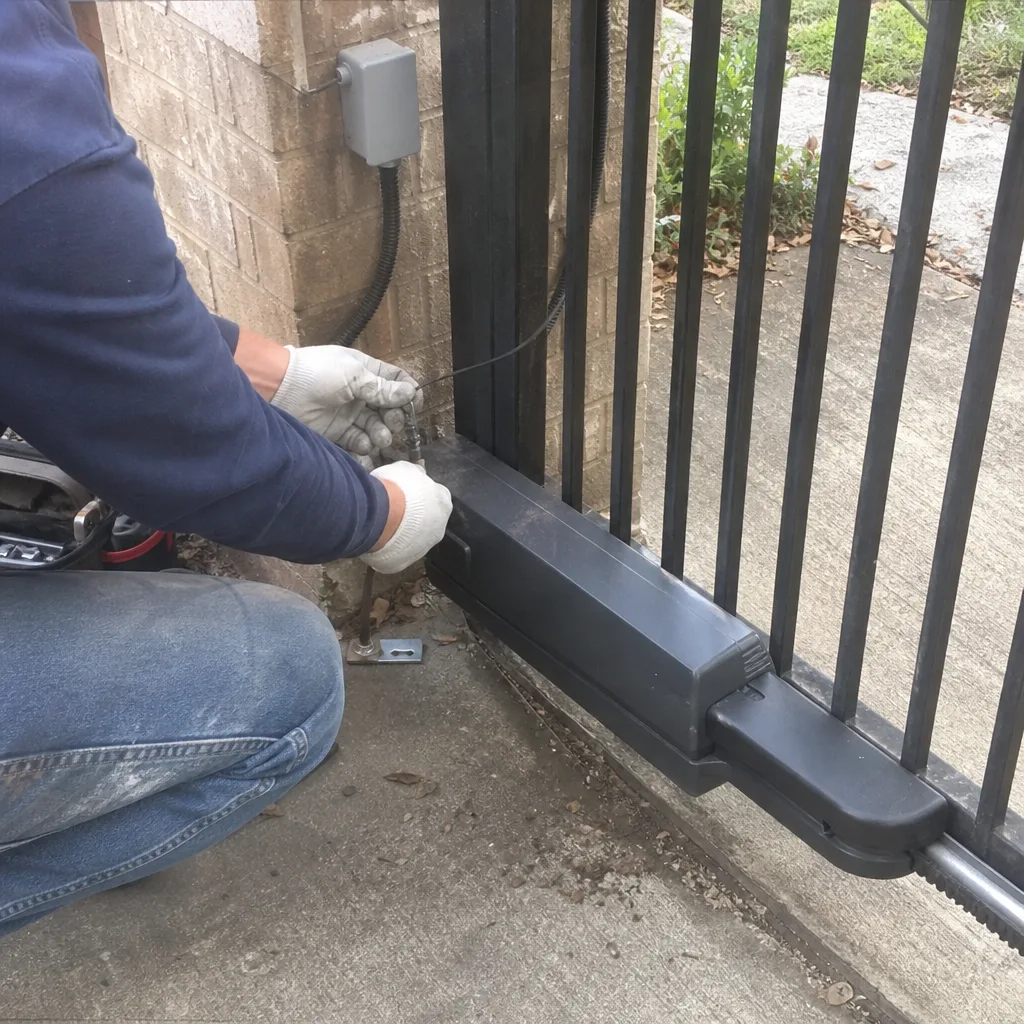
A limit switch is the component that tells the motor where to stop. On most residential operators, it’s either a mechanical switch that the gate arm physically trips or a magnetic sensor that reads a reference point. When that switch drifts, the gate stops in the wrong place. The symptom is unmistakable: the gate that used to open to exactly 90 degrees now stops at 80, or it slams against the open stop with a thump that rattles the post.
Limit-switch drift happens slowly. A quarter inch at first. Then an inch. League City homeowners notice it most when a delivery driver has to squeeze past a gate that used to clear the driveway, or when the gate starts reversing itself because it overshot and triggered the safety reversal. The drift itself isn’t the failure. The failure is what the drift tells you: the switch mechanism is wearing, or the gate’s physical geometry has shifted underneath the switch setting.
We’ve seen a specific version of this in League City’s older neighborhoods where the gate posts were set in the 1990s on soils that have since compacted. The post leans half a degree. The gate still looks level from the street. But the limit switch that was perfectly calibrated five years ago is now off by eleven degrees, and the gate closes against resistance it was never designed to overcome. The motor compensates. For a while.
Here’s the diagnostic sequence we use on a LiftMaster or FAAC swing operator with suspected limit drift:
- Run the gate through a full cycle and mark where it actually stops with a piece of painter’s tape on the driveway or a chalk line on the post.
- Trigger the gate again and watch for variation between cycles. A difference of more than two inches between two consecutive stops is a switch problem. A consistent wrong position is usually a physical obstruction or a shifted post.
- Photograph the stop position from two angles, including one from directly overhead if possible.
- Note whether the gate reverses after overshooting or just stays in the wrong position. Reversal means the safety circuit is working. No reversal means the safety circuit needs inspection too, and that’s a bigger conversation.
Limit-switch repair is typically the lowest-cost fix on this list unless the switch has failed so thoroughly that the control board needs replacing. Most swing-gate limit switch replacements in League City run between $180 and $340, depending on the operator brand and whether the switch is accessible without removing the motor housing. The gate operator is the bigger variable. A board-level failure tied to repeated overload from a bad limit switch can push the repair into the $500 to $900 range, which is why drift is cheaper to catch in week one than week ten.
Hinge and Roller Wear: The 90-Day Countdown
Hinges and rollers wear in stages, and each stage has a specific visual signature that tells you how much time is left. League City’s humidity accelerates the timeline because salt-laden air off Galveston Bay keeps ambient moisture on metal surfaces for more hours each year than an inland climate would, and the freeze-thaw cycles we get every few winters force water into micro-cracks that a dry climate would never open. Our Seasonal Gate Repair Care for League City: Year-Round Homeowner’s Guide breaks down how to time maintenance to these cycles.
Stage one: surface rust. An orange, powdery bloom on the hinge barrel or roller face. This is cosmetic in the strictest sense. The metal underneath is still sound, and the fix is usually a scuff-and-seal session, wire brush the rust, apply a corrosion-inhibiting coating, and check for play. You have months of runway at this stage. A hinge with surface rust will not fail in 90 days.
Stage two: pitting. The rust has eaten past the surface and left small craters you can feel with a fingernail. Pitting on a weld seam or a roller wheel is the 90-day clock starting. The component hasn’t failed, but its load-bearing capacity has been compromised, and the failure mode from here is not gradual sag, it’s fracture. A pitted roller wheel can shatter under load without any further warning, and a shattered wheel drops the gate onto the track hard enough to derail it.
Stage three: weld cracks versus paint cracks. This is the distinction most homeowners don’t know to make. A paint crack is a hairline line in the coating only. Rub your nail across it and it feels smooth. A weld crack is a line that runs through the metal itself, and it will catch your nail. Weld cracks on a gate hinge are a same-week repair, not a next-month repair. The hinge is tearing, and a full gate leaf falling is a serious injury risk, not just a property risk.
The 90-day rule, in our experience across 22,000-plus gate repairs in this area, applies to stage two pitting on any load-bearing component: hinges, roller wheels, chain links, and the bolt heads that anchor the operator arm. If you can feel the pitting with your fingernail, you have about one season left. In League City, that season might be a wet spring that accelerates everything. Schedule the repair before the next big storm cycle pushes the component past its fatigue limit.
For homeowners researching what a full replacement involves, our Gate Repair in League City page covers the scope and pricing structure for hinge, roller, and weld work, including what a written quote includes before any work begins.
Intermittent Failures: Why “Sometimes It Doesn’t Open” Is the Real Red Flag
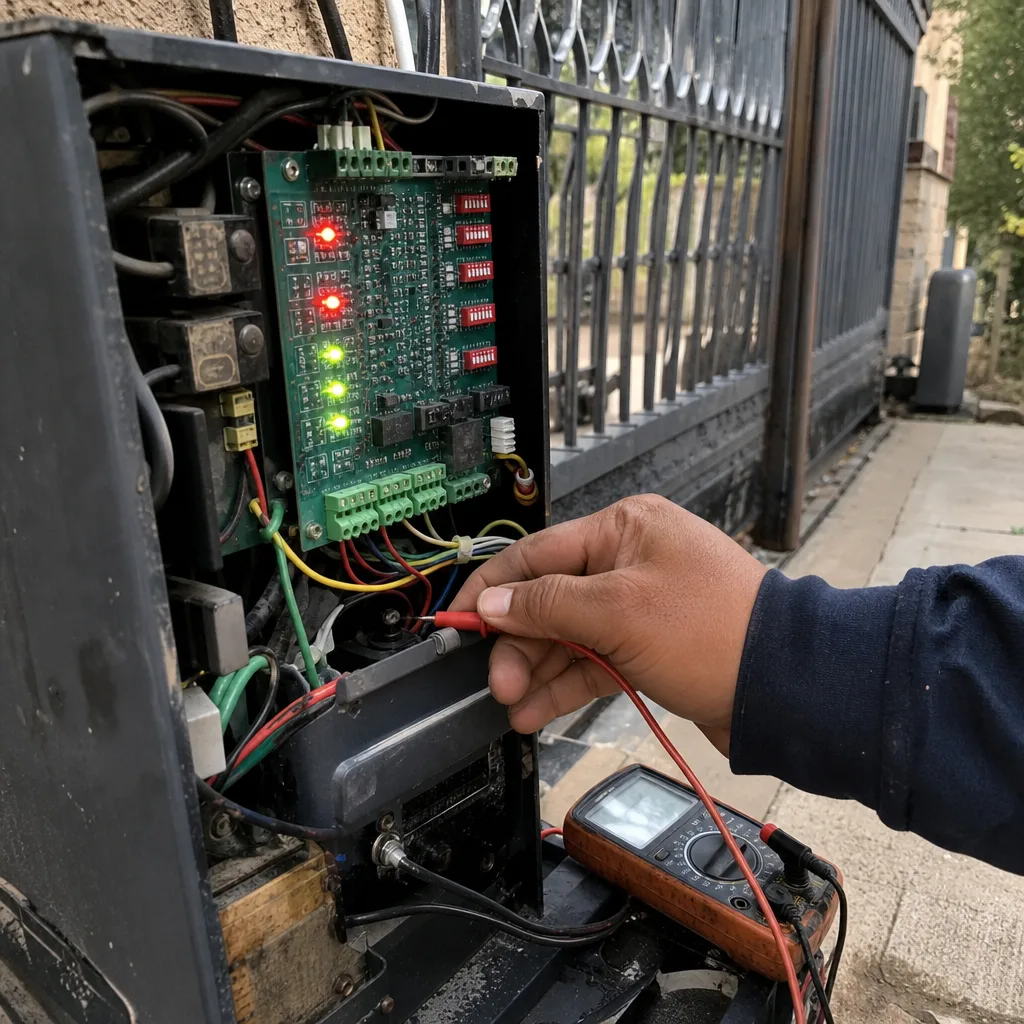
Most homeowners treat a gate that stopped completely as the emergency and a gate that fails occasionally as the inconvenience. That ranking is backwards. A gate that stopped completely has a known failure. It’s not going to surprise you again, it’s already failed. A gate that fails once every ten or twenty cycles has a degrading component that has not yet declared itself, and that component will choose the worst possible moment to finish the job.
Intermittent failure is the signature of a few specific conditions. A control board with a cold solder joint will work when the board is cool and fail when the sun has been on the box all afternoon. A photo-eye with a loose wire will pass continuity when the wind isn’t blowing and fail when the wire shifts. A remote receiver with a failing capacitor will pick up the signal at 20 feet in dry weather and miss it at eight feet in Gulf humidity. Each of these behaves like a gate that’s “acting up” right up until the moment it behaves like a gate that doesn’t work at all.
The reason intermittent is more urgent: you cannot schedule the failure. A gate that stopped completely is down, and yes, that’s an inconvenience, but it’s a known situation. You call for repair, the repair happens, the gate works. A gate that fails intermittently will pass through your gate company’s diagnostic checklist on a good day and strand you on a bad one, and intermittent failures are the single most common reason homeowners call us twice for what should have been a one-day job.
The fix for intermittent failure starts with documentation, and documentation is what separates a guess from a diagnosis. Our field practice is to leave a photo log of what was found, what was tested, and what was set, so when the gate fails again two weeks later, the next visit starts from the record rather than from zero. A homeowner who keeps a simple log, date, time, weather, what happened, what fixed it temporarily, cuts the diagnostic time by half, and diagnostic time is billable time on most trucks. On our trucks, the written price comes before the diagnostic, so the log protects you either way.
Control Board Warning Lights and Error Codes: A Flashing Light Is Not Always an Error
Every modern gate operator has a control board with at least one diagnostic LED, and most have a multi-digit display or a sequence of blinks that corresponds to a specific fault. Homeowners misread these constantly. A flashing light is not always an error, and a solid light is not always a clean bill.
On a standard LiftMaster residential slide operator, a steady green LED means the board is receiving power and the logic circuit is armed. That’s normal. A flashing green means the board has logged a fault and the fault is stored in memory until it’s cleared. A flashing red, depending on the model, usually points to the photo-eye circuit or the safety edge. None of these lights tell you the gate is broken. They tell you the board detected something outside its normal parameters, and the meaning of that something requires reading the flash pattern against the chart in the manual, or simply photographing it and sending it to someone who knows the chart.
Here’s a practical reading guide for the brands we service most in League City:
- LiftMaster and Mighty Mule: blink count matters. One blink is usually a limit switch or travel module fault. Two blinks often indicate a photo-eye obstruction or misalignment. Three or more blinks on a Mighty Mule point to motor overload or a short in the actuator harness.
- DoorKing: the 115V and 24V indicator LEDs on the 1601 and 9150 boards are straightforward: lit is good, dark is a power supply problem. The fuse LEDs tell you exactly which circuit pulled too much current, and a blown fuse is a symptom, not a fix, the overload that blew it still needs to be found.
- Elite and FAAC: these boards often use a small LCD display or a series of DIP switches with an accompanying LED pattern. The display readings are more useful than the lights, and a photo of the display after a fault is the single most valuable diagnostic artifact a homeowner can capture, because it records the exact fault code before any reset clears it.
The mistake to avoid: resetting the board with the power-off reset procedure before documenting the code. A power cycle clears the fault memory on many residential boards, and the technician who arrives an hour later sees a healthy board with no history. The gate works for a week, then fails again, and the same code has to be caught twice. Don’t reset before you photograph. The picture is the evidence. Under our documentation standard, that evidence goes in the job file, and it follows the gate through every future repair.
Documenting the Warning: What to Photograph and Note Before the Technician Arrives
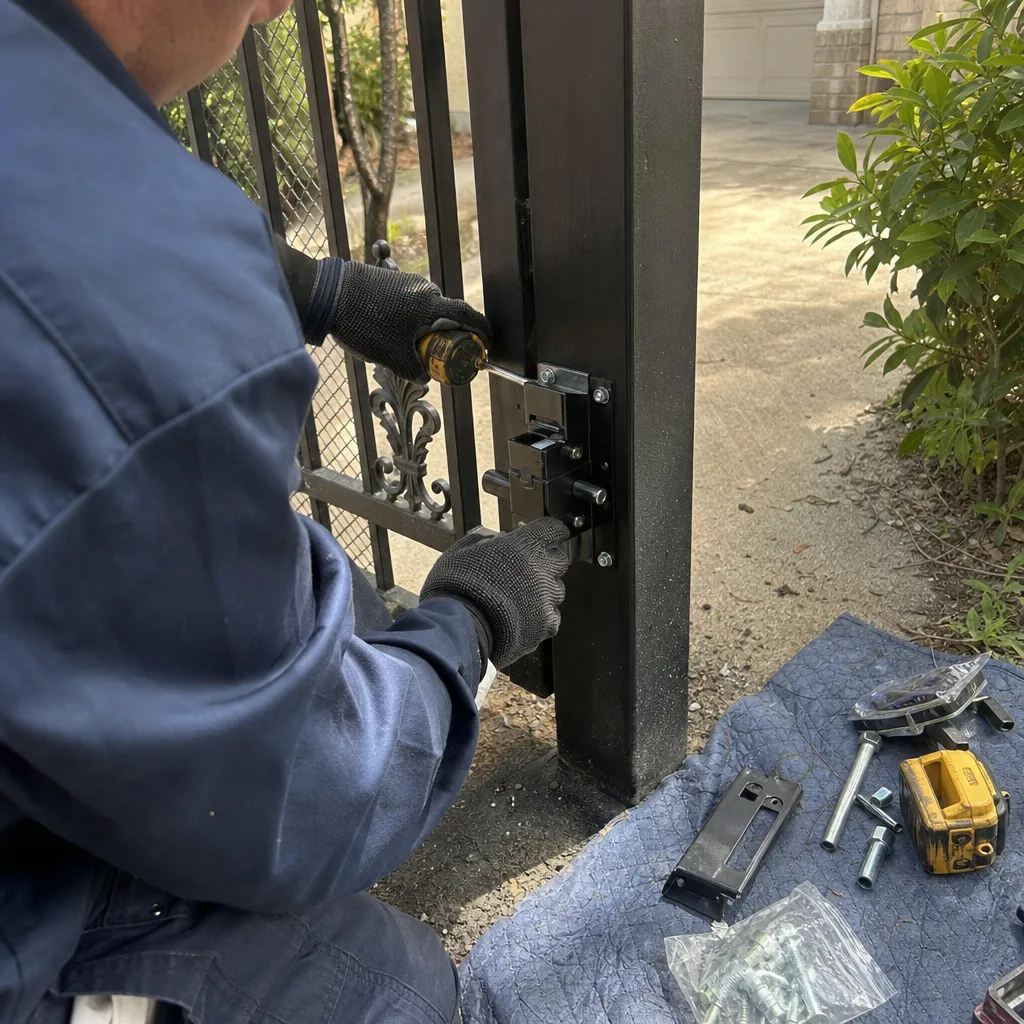
Every League City homeowner with a phone has the tool to cut their diagnostic bill in half, and most don’t use it. A gate that misbehaves should be documented the same way you’d document a car accident: photos, time stamps, and a written note of the exact circumstances. The reason matters. A gate technician who arrives to a gate that is currently working has to reconstruct the failure from your description, and descriptions are lossy. Photos and notes are not.
Here’s what to capture, in order of diagnostic value:
- The control board display or LED pattern at the moment of failure. If the gate just failed, don’t touch anything. Open the control box if you can do so without disconnecting anything, and photograph the board exactly as it sits. The LED pattern or error code is the single most valuable piece of evidence you can hand a technician.
- The gate’s physical position at failure. Half open? Fully open? Stuck against the stop? The position tells us whether the failure is mechanical (a physical bind) or electrical (a command or power issue).
- The remote or keypad behavior. If the remote worked but the keypad didn’t, or vice versa, note that separately. It narrows the field between a receiver problem and an input problem.
- Weather conditions. League City’s humidity and rain are active participants in gate failures. A gate that fails only during or immediately after a heavy rain is telling you the moisture is reaching something it shouldn’t.
- Any unusual sound, captured as video. Ten seconds of audio is worth more than any verbal description of a noise.
What not to do before the appointment: don’t apply WD-40 or any other lubricant to hinges, rollers, or the operator arm. Don’t attempt to adjust the limit switches. Don’t disconnect the battery backup if the gate has one. Each of these erases evidence. The lubricant masks the friction signature that points to a specific component. The limit-switch adjustment changes the baseline the technician needs to reference. And disconnecting the battery can reset the board’s fault memory. Leave the gate as it sits, document it, and hand the evidence to the person who’s licensed to act on it.
League City Climate and Your Gate: Humidity, Salt Air, and Soil Shift
A gate in League City lives a different life than the same gate in Dallas or Austin. Three local factors shape the failure timeline: Gulf humidity, salt-laden air from Galveston Bay, and the expansive clay soils that shift under concrete and steel throughout the year.
The humidity number that matters is not the average, it’s the duration. League City sits close enough to the Gulf that ambient humidity stays above 70 percent for long stretches, especially from May through October. That means the condensation cycle on metal gate components happens daily, not seasonally. The inside of a control box can stay damp all summer if the box isn’t sealed properly, and a damp control board corrodes at the solder joints first. The symptom is usually intermittent failure, the board works when it’s dry and fails when it’s humid, and the owner attributes it to the heat when the real culprit is electrochemical.
Salt air does the rest. The closer you are to Clear Creek or the Bay, the more chloride makes it into the air and onto your gate’s metal surfaces. Chloride accelerates rust pitting. The same gate hinge that would last fifteen years in Spring Branch will show pitting in eight years in Bay Colony. That’s not a quality issue, it’s chemistry. The fix is more aggressive surface maintenance, and we adjust our corrosion recommendations by neighborhood, a gate in South Shore needs a different coating schedule than a gate in Westwood.
Soil shift is the wildcard. League City sits on gumbo clay that swells when wet and contracts when dry. Gate posts set in that soil will move over time, and a post that has shifted half a degree puts a load on the hinge side that the gate was never designed to carry. The warning sign is a gate that binds at one specific point in its travel, the same spot every cycle, regardless of temperature or humidity. That bind is the gate telling you the geometry has changed. The fix is usually a post stabilization or a hinge realignment rather than a motor replacement, but only if the bind is addressed before it destroys the motor bearings. If you’re seeing this pattern and researching options, our Gate Installation in League City page covers what a proper post set and hinge alignment involve, including why written scope matters when the job touches concrete.
Common Mistakes to Avoid
- Resetting the breaker before photographing the control board. A reset clears the fault code, and the technician who shows up to a healthy board has lost the single best diagnostic clue. Photograph first, reset second, or don’t reset at all until someone tells you to.
- Lubricating hinges and rollers before the repair visit. The lubricant masks friction signatures and contaminates the evidence. It also attracts dust, which becomes a grinding paste against the very surface you were trying to protect.
- Treating intermittent failure as a minor annoyance. “Sometimes it doesn’t open” is the most serious warning on this list. A component is degrading, and it will fail completely at the worst possible time. Intermittent is the last stage of gradual, not the first.
- Ignoring a gate that reversed itself and returned to open. A gate that overshoots and reverses did not fix itself. It activated a safety circuit because the limit switch failed to stop it, and the reversal is the only thing standing between you and a damaged gate. The limit switch still needs replacement.
- Skipping the photo record. Every visit should leave a documented record of what was found and what was done. If your previous gate company didn’t leave photos or notes, that’s the first clue you’re due for a second opinion. A gate repair without documentation is a guess with a warranty.
- Waiting until the gate fails completely to research repair costs. The price to replace a limit switch early is a fraction of the price to replace a control board after six months of overload. Knowing the Gate Motor & Opener repair range before the failure gives you a baseline to judge any quote against.
- Assuming all gate companies service all brands. Some shops steer homeowners toward replacing a perfectly serviceable DoorKing or Elite operator because they don’t stock parts or training on that brand. Before you accept a replacement quote, ask if the company services the motor already on your property. We service nine brands, including LiftMaster, Mighty Mule, DoorKing, and Elite, precisely so the answer is yes more often than no.
When to Call a Professional
A gate is not a household appliance. It’s a heavy moving object under tension or load, and several of its failure modes involve force levels that can cause serious injury. High-tension springs, counterbalance cables, and a gate leaf that weighs several hundred pounds are not DIY territory. If you see a cracked weld on a hinge, a frayed cable, or a gate that has jumped its track, stop using the gate, block it in place if it’s at risk of falling, and call a professional. The same goes for any control-board work that involves exposed terminals. The diagnostic documentation we’ve described, the photos, the notes, the logs, is your role. The repair is ours.
Vance Gate Repair League City offers free estimates in League City, and we serve the whole city from Clear Creek to Bay Colony. Call (346) 787-1751. The written price comes before any work starts, and the photo record comes before we leave. That’s the Vance Gate Repair League City home standard, and it applies to every visit.
Frequently Asked Questions
The most common early warning we see in League City is a delayed start, a pause of two seconds or more between the remote signal and the gate movement, which usually traces to a capacitor or a limit-switch issue rather than the motor itself. The pause is the control board thinking through a fault, and it’s cheaper to diagnose in week one than to chase later. Call (346) 787-1751 for a written estimate if you’re seeing this pattern.
Most residential gate repairs in League City fall between $180 and $650, with the low end covering limit-switch adjustments, hinge lubrication and tightening, and remote programming, and the high end covering control-board replacement, hinge welding, or actuator rebuilds. A full motor replacement on a swing gate typically runs $800 to $1,600 depending on the brand, with LiftMaster, Mighty Mule, DoorKing, and Elite units all in different ranges. The price is written and agreed before any work begins, never after.
In most cases, yes. A limit-switch adjustment, a photo-eye realignment, a hinge tightening, or a control-board reset can usually be handled in a single visit. The exception is when a part has to be ordered, and that’s brand-specific, a DoorKing board might be in local stock while a specialized Elite actuator takes a few days. We’ll tell you which one you’re looking at before we start, not after.
A gate that opens partway and then reverses is usually hitting an obstacle, real or sensed, and the most common cause is a misaligned photo-eye or a failing safety edge that’s sending a false obstruction signal. The gate’s safety system is doing its job, but the sensor needs adjustment, and ignoring it means the gate will eventually refuse to close at all. Photograph the position where it reverses and call us, the photo tells us which circuit to check first.
Humidity-related failures point to moisture reaching the control board, the photo-eye wiring, or a corroded connection, and League City’s Gulf humidity makes this more common here than in drier parts of Texas. The fix is usually a board cleaning or a connector replacement rather than a full motor replacement, but only if the board hasn’t been running damp for so long that the corrosion has eaten the traces. Catch it the first season you see the pattern.
We service nine gate-automation brands including LiftMaster, FAAC, BFT, Linear, Viking, Ghost Controls, DoorKing, Elite, and Mighty Mule, so the answer is usually yes regardless of what’s already bolted to your post. We’d rather repair the motor you have than sell you one you don’t need, and the written estimate will show you exactly what that repair costs before anyone picks up a tool. Call (346) 787-1751 and we’ll put the price on paper in front of you.
The Bottom Line
Most gate failures give a two-to-four-week warning. The warning looks like a pause, a sound, a pattern of rust, or a light on a board, and it looks like an annoyance if you don’t know the vocabulary. Now you know the vocabulary. A delayed start costs less to fix than a seized motor. A pitted hinge costs less than a dropped gate. A photographed error code costs less than a second diagnostic visit. Document what you see. Call before the warning expires. The price should be written, the work should be documented, and the gate should open like it’s supposed to, every single time. For more guides & resources on keeping your gate reliable, visit our blog. In League City, that’s how we do it, and it’s how the gate tells us we got it right.
Written by Adrian Vance, Owner at Vance Gate Repair League City, serving League City since 2014.