
Last updated September 20, 2026
Free on-site gate assessment - hinges, posts, and your LiftMaster or Nice gate operator checked before anything is quoted
The assessment is free and the quote is the invoice.



 Before
 After
After Before
 After
After Before
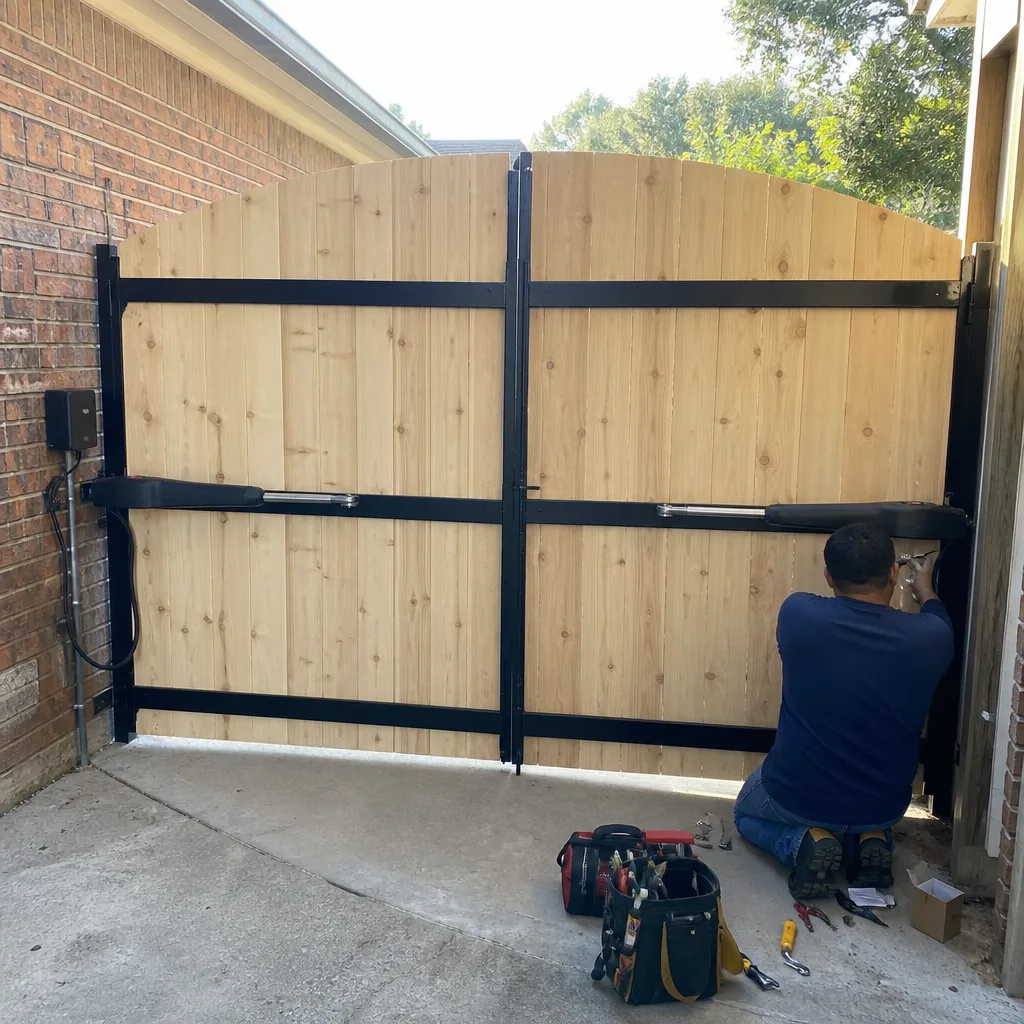 After
AfterGate Repair Permits, Codes & Inspections in TX: What You Need to Know
Here is a statistic that surprises most League City homeowners: a failed circuit board in your existing gate opener can, under a strict reading of the Texas building code, be classified as a repair that needs no permit, while swapping that same opener for an identical model can trigger a replacement classification that requires a permit, an inspection, and sometimes a revised site plan. The line between repair and replacement is not about the size of the part; it is about whether the work changes the gate’s structural envelope, foundation, or safety system. This Gate Repair Warning Signs: A League City Homeowner’s Reference Guide walks through exactly where those lines sit in League City, what happens when a job crosses them, and how proper documentation (the kind you can hold in your hand) protects you from a forced tear-down later. By the end, you will know how to classify common gate work, what UL 325 actually requires for automated operators, and how to check whether your existing gate ever had a permit at all.
Quick Answer
Most cosmetic and component-level gate repairs in Texas do not require a permit, but structural modifications, full gate replacements, and any automated operator wired to line voltage can trigger permit requirements at the city or county level depending on your exact League City jurisdiction. UL 325 safety compliance applies separately from building permits, and any repair that alters a gate’s safety circuit without documented testing can void the original operator certification. Before any contractor touches your gate, confirm your jurisdiction, classify the work as repair versus replacement, and photograph the site with dated images.
Table of Contents
- Repair vs. Replacement: Where Texas Draws the Line
- League City vs. Harris County vs. Galveston County: Three Sets of Rules
- UL 325 Compliance for Automated Gate Operators
- What a Pre-Permit Photo Set Should Capture
- How to Find Your Gate’s Original Permit (or Confirm None Exists)
- What to Do If Your Original Gate Was Never Permitted
- What Permits Cost and Who Pays When Things Go Wrong
- Common Mistakes to Avoid
BeforeAfterRepair vs. Replacement: Where Texas Draws the Line
In Texas, building permitting is a municipal function, not a state one. The state adopts the International Residential Code (IRC) as a baseline, but each city and unincorporated county area decides which IRC sections it enforces and how strictly. That means the same gate repair could be classified as exempt in one League City subdivision and permit-required in another, depending on whether the property sits within city limits or in an unincorporated pocket governed only by Harris or Galveston County rules.
Generally speaking, permit triggers in gate work fall into four categories:
- Structural changes to the gate frame, posts, or foundation. Replacing a rotted post, widening an opening, or converting a single gate to a double gate moves the work from repair to replacement in most Texas jurisdictions.
- Line-voltage electrical work that runs new conduit, new circuits, or new disconnects. A plugged-in opener that only connects to an existing GFCI outlet usually stays in repair territory. Running a dedicated 110V or 220V feed to the operator is new electrical work and almost always requires a permit.
- Full gate panel replacement where the frame, hinges, or post footings change. If the new panel mounts to the same posts and hinges and weighs roughly the same as the old one, some Texas jurisdictions still consider it a repair. If the posts move or the hinge geometry changes, it is a replacement.
- Right-of-way or setback alterations where a gate moves closer to the street than the original approved site plan allowed. League City enforces setback rules on corner lots and short-driveway homes more strictly than most homeowners expect.
In League City specifically, we have seen the city classify a failed gate motor replacement as a new installation when the original motor was never permitted and the new motor required a new concrete pad and conduit run. That is the gray zone in action: the homeowner only intended a like-for-like swap, but the pad and the electrical work pushed the job into replacement territory. The permit fee itself was modest; the retroactive inspection and revised site drawing were not.
For Gate Repair in League City, the practical question to ask any contractor is not “can you fix this” but “is this a repair or a replacement on paper” because that classification determines whether you owe a permit before the work starts.
League City vs. Harris County vs. Galveston County: Three Sets of Rules
League City is one of only a handful of Texas municipalities that spans two counties. The Galveston County portion contains most of the city’s residential neighborhoods, while the Harris County portion includes areas north of Clear Creek and parts of the newer master-planned developments along FM 646 and Interstate 45. That split matters because building departments do not share jurisdiction: a gate permit processed through League City’s building department follows League City’s fee schedule and inspection timeline, while a property in unincorporated Harris or Galveston County follows the county’s rules, which are looser in some respects and tighter in others.
Here is what that looks like in practice for gate work:
- City of League City limits: most structural gate work and all line-voltage electrical work require a permit. League City uses a contractor registration system, and the building department typically wants a site plan showing the gate location relative to the property line and the primary structure. Inspections are scheduled, not drop-in, and the inspector will check the gate footing depth if a new post goes in.
- Unincorporated Harris County: Harris County enforces building codes in unincorporated areas through its Engineering Department. Permits for residential gate work are less common, but Harris County does require permits for any electrical work that modifies a service panel or runs new conduit under a structure. Setback enforcement is lighter than League City, but HOAs often step in with their own rules that exceed county minimums.
- Unincorporated Galveston County: Galveston County has historically been the least restrictive of the three for gate work, but it is also the jurisdiction where unpermitted work creates the most resale friction. A gate installed without documentation in unincorporated Galveston County often surfaces during a home sale as a disclosure issue, not a code enforcement issue.
The practical takeaway is to confirm your exact jurisdiction before any gate work begins. A League City mailing address does not always mean League City permitting. Some homes with League City addresses sit in unincorporated county pockets, and homeowners in those pockets sometimes learn the difference only after an HOA architectural committee rejects a gate design that the county would have never looked at twice.
UL 325 Compliance for Automated Gate Operators
UL 325 is a safety standard for automated gate operators published by Underwriters Laboratories, and it is the document that governs how a gate’s safety system must behave when a person, a car, or a child enters the gate’s path. The standard covers entrapment protection, force limits, warning signage, and the fail-safe behavior of photo-eyes and contact edges. It is not a building permit requirement in Texas, but it is the benchmark a court will use if an automated gate injures someone on your property.
Any repair that touches the operator’s safety circuit (the photo-eye loop, the contact edge, the entrapment sensor, or the force-sensitivity setting) can void the operator’s UL 325 certification if the work is not tested and documented afterward. That is not a hypothetical risk. In our experience across League City, we regularly see operators where a previous repair swapped a failed photo-eye for a generic part without recalibrating the force limit, leaving the gate running at two or three times the allowable closing force.
On the brand side, the rules apply the same way whether the motor is a LiftMaster, a FAAC, an Elite, or a Mighty Mule. What changes is how each brand documents compliance. Elite and FAAC operators ship with a factory test log and expect installers to record final force measurements. LiftMaster publishes a set of entrapment-protection checklists that most inspectors recognize. Mighty Mule units sold for residential use are generally simpler, but they still need a working photo-eye or contact edge on any gate over a certain width and weight.
Here is a numbered breakdown of what UL 325 compliance requires on a typical League City residential gate:
- A functioning entrapment protection device (photo-eye, contact edge, or both) on any automated gate that closes toward a solid object.
- A force limit set no higher than the standard allows for the gate’s weight and travel; most residential gates should reverse with moderate hand pressure.
- Warning signage on both sides of the gate, mounted at a visible height.
- A documented test after any repair that touched the safety circuit, showing the photo-eye response time, the force setting, and the reversal distance.
- No bypass jumpers left in place. A jumper across a photo-eye terminal is the most common UL 325 violation we find, and it is almost always left by a previous repair.
For Gate Motor & Opener in League City work, the safety documentation is the part that matters most. Under our Haven Standard Clause 4, every visit includes a photographed record of what was found, what was set, and what was installed, including limit-switch positions and force readings. That is the documentation a UL 325 audit or a liability claim will ask for.
What a Pre-Permit Photo Set Should Capture
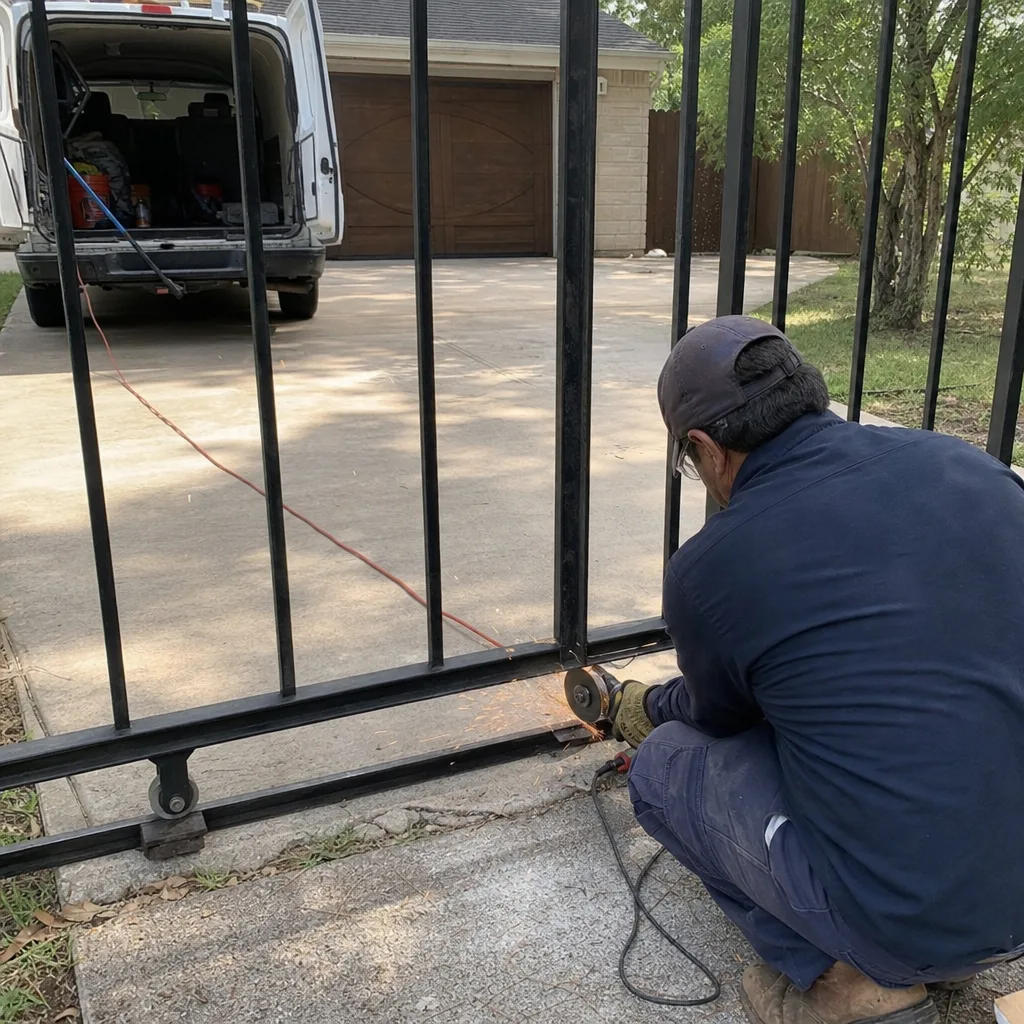
Dated, labeled photos taken before any gate work begins are the cheapest insurance a League City homeowner can buy. If a neighbor disputes the scope of work, if the city questions whether a post actually moved, or if an inspector asks for proof that the original operator was present before the job, the photo set answers those questions without argument. We recommend a specific set of images, and we document them on every job we touch under Clause 4 of the Haven Standard.
A pre-permit photo set for gate work should capture:
- The full gate assembly from the street side and the house side, showing the entire frame, both posts, and the relationship to the driveway edge.
- Both post bases at ground level, including any visible cracking in the concrete collar or signs of post lean.
- The operator and its mounting pad, showing the brand, the model number where visible, and the condition of the arm bracket.
- The electrical connection point, including the disconnect or outlet and any visible conduit run.
- The photo-eye and contact edge positions with measurements, if your phone camera allows a ruler shot.
- The property line context on both sides of the gate, so the setback from the gate to the street and to the side fences is visible.
- Identify your jurisdiction using the League City address lookup tool or the county tax assessor’s parcel search. If your property is in League City city limits, the League City Building Department holds the records. If it is in unincorporated Harris or Galveston County, the county engineering department holds them.
- Search the jurisdiction’s permit database using your street address. League City uses an online permitting portal; Harris and Galveston counties have their own search tools. Search by address, not by contractor name, because gate permits are often filed under the homeowner’s name as the responsible party.
- If the database shows no gate permit, that confirms the gate was never permitted through that jurisdiction. That does not automatically mean the gate is illegal; it means no paperwork exists, and any future work classified as a replacement will need to establish a new permit record.
- Check with your HOA, if one exists. HOAs in League City subdivisions like South Shore Harbour, Tuscan Lakes, or Mar Bella often kept architectural-approval records even when the city never issued a permit. An HOA approval letter can support a “pre-existing, nonconforming” classification for a gate that predates current setback rules.
- Look for evidence on the gate itself, including a manufacturer date code on the operator, a concrete pour date scratched into a post base, or a survey stake near the property line. These physical markers create a timeline that helps a building department apply the code version in effect when the gate was originally installed.
- Assuming every gate repair is permit-exempt. Component swaps on an existing gate usually are, but structural repairs and new electrical runs are not. The classification depends on what changes, not on what broke.
- Relying on the installer to know the local code. Many gate companies operate across multiple jurisdictions and apply the loosest rule set to every job. A contractor who pulled permits in unincorporated Galveston County may not realize League City’s city limits have stricter footing and setback rules.
- Skipping the HOA review. League City HOAs, particularly in newer subdivisions off FM 646, often have design standards that exceed city code. An HOA rejection is not a building permit issue, but it can force a gate redesign after the contractor has already poured concrete.
- Replacing an operator without testing the safety circuit. A new LiftMaster or FAAC operator installed on a gate with a misaligned photo-eye or a jumped safety contact will pass the mechanical test and fail the safety test. Document the test or the UL 325 certification means nothing.
- Discarding the old operator before photographing the tag. The serial number and date code on the old unit are often the only proof of when the original work was done. Photograph the tag before the scrap pile gets it.
- Accepting a verbal estimate for permitted work. A handshake quote on a gate that requires a permit leaves you with no paper trail when the inspector asks who did the work and what scope was approved. Written price, written scope.
- Using the county’s permit rules for a city-limit property. A League City mailing address does not put the property in county jurisdiction. Confirm the jurisdiction before assuming the county’s more lenient rules apply.
Each photo should have a date stamp and a label. Most modern phones embed the date automatically, but the label requires a quick note (for example, “left post base, north side, March 14”) written on a piece of paper held in the frame or added to the file name later. The point is that a year from now, when the city or an HOA asks a question, you or your contractor can produce the exact image instead of relying on memory. On any Gate Installation in League City job, that photo set is part of the file, not an optional add-on.
How to Find Your Gate’s Original Permit (or Confirm None Exists)
Most homes in League City built before 2015 never had a gate permit on file, even if the gate itself was installed by a professional company. That is not an accusation against any builder or gate company; it reflects the reality that automated gates on existing single-family homes were rarely flagged for permit review unless a homeowner application, a neighbor complaint, or an HOA rule brought the gate to a building department’s attention.
To check whether your gate has a permit history, follow these steps:
If the original permit is missing and you plan to sell your League City home, disclose the gate’s unpermitted status in writing to the buyer’s agent. Unpermitted gate work rarely blocks a sale in this market, but an undisclosed permit gap discovered after closing can become a small claims dispute.
What to Do If Your Original Gate Was Never Permitted
Finding out your gate was never permitted is uncomfortable, but it is not the disaster some contractors make it sound like. Texas building departments, including League City’s, are generally more interested in bringing a structure into compliance than in punishing a homeowner who bought the property years after the unpermitted work was done. The path forward follows a predictable sequence.
First, determine whether the gate as it stands today would pass a permit review under current code. A gate that sits at the proper setback, has a working safety system, and uses a properly installed electrical connection may pass a retroactive permit review with minor corrections. A gate that sits inside the street setback or lacks any entrapment protection may need design changes before the city will issue a retroactive permit.
Second, gather the evidence that the gate predates your ownership. A dated sales photo, a home inspection report that mentions the gate, or a statement from a neighbor who watched the original installation all help establish the gate’s age. The code section that applies to a retroactive review is usually the version in effect when the work was done, not the current version, assuming you can document the install date.
Third, be prepared for the inspector to ask for the same things a new permit would require: a site plan, a footing depth for any new posts, and a UL 325 test for any automated operator. On jobs where a League City homeowner asks us to bring an unpermitted gate into compliance, the written scope under Haven Standard Clause 1 lists every item the city will want reviewed, so the homeowner sees the entire path before any work starts.
And if you are the one who installed the unpermitted gate years ago, the same retroactive process applies. The difference is that you will pay the permit fee and the inspection fees without the benefit of a prior owner to share the cost. In our League City experience, the total retroactive permit package for a single residential gate on a compliant site runs in the low hundreds, not the thousands, unless the gate needs structural corrections to pass.
What Permits Cost and Who Pays When Things Go Wrong
Permit fees for gate work in Texas are modest compared to the cost of the gate itself. League City’s residential permit fees for a typical gate replacement or operator install generally run between $75 and $250 depending on the valuation of the work and whether electrical review is required. Harris and Galveston county fees for similar work are in the same range, sometimes lower for simple repairs. The real cost is not the permit; it is the inspection timeline and the potential for corrective work if the gate fails a review.
Here is a typical cost structure for a permitted gate replacement in League City:
| Line Item | Typical Range |
|---|---|
| Residential gate permit (League City) | $75 - $250 |
| Electrical permit (if new circuit required) | $50 - $150 |
| Inspection fee (per visit) | $50 - $100 |
| Retroactive permit surcharge (if unpermitted work is found) | 1x - 2x the standard fee |
| Site plan revision (if setback or easement issue found) | $100 - $400 |
Who pays when things go wrong depends on how the work was ordered. Under a properly written contract, the contractor is responsible for pulling the correct permit and paying the associated fees out of the contract price. If the contractor fails to pull a permit and the city later requires one, the homeowner is the one who gets the citation, but the contractor is the one with the license liability. That is why the written price and the written scope matter: a verbal agreement leaves the homeowner holding the blame, while a written scope shows exactly who was responsible for the permit. For help choosing the right professional, see our guide on How to Hire a Gate Repair Contractor in League City: A Step-by-Step Guide.
Our approach on Vance Gate Repair League City home service calls is to classify the work before we touch the gate, tell the homeowner in writing whether a permit is required, and include the permit fee as a separate line item on the written price. The price is quoted and agreed before any work starts, and it does not change later because we forgot to mention a permit.
Common Mistakes to Avoid
When to Call a Professional
Any gate work that involves a structural post, a line-voltage electrical connection, or an automated operator’s safety circuit deserves a licensed professional, not a handyman with a multimeter. The specific triggers we would call out are: a post that has shifted more than an inch out of plumb, an operator that trips a breaker on every cycle, a photo-eye that has been jumpered or painted over, and any gate that closes with enough force to knock over a child. These are not cosmetic problems, and the cost of a do-it-yourself mistake on a UL 325 safety circuit is measured in hospital bills, not replacement parts. For League City homeowners who want a written answer to a permit question before they spend any money, Vance Gate Repair League City offers free estimates in League City with the classification of the work spelled out on paper before any tool leaves the truck. Call (346) 787-1751 and a live person answers.
Frequently Asked Questions
Most component-level repairs (hinges, operator circuit boards, photo-eye alignments) do not require a permit in Texas, but structural repairs, full panel replacements that change post or footing geometry, and any new line-voltage electrical work often do. In League City, the classification depends on whether the work is a repair or a replacement under the city’s building code, so confirm your jurisdiction and the scope before work begins. Call (346) 787-1751 if you want a written classification of your repair.
A repair keeps the existing gate’s structural envelope, posts, and electrical service intact; a replacement changes one of those elements, such as moving a post, enlarging the opening, or running a new electrical feed to the operator. The trigger is structural or electrical, not cosmetic. When in doubt, photograph the site and ask your contractor to classify the work in writing before starting.
A residential gate permit in League City typically costs between $75 and $250, with an electrical permit adding $50 to $150 and each inspection visit adding another $50 to $100. Retroactive permits for unpermitted work can run one to two times the standard fee. The permit fee is small relative to the corrective work that a failed inspection can force.
Yes, in practice. UL 325 is a safety standard, not a building permit requirement, but any gate operator installed or repaired in Texas should comply with it because liability courts use the standard as the benchmark for safe operation. Any repair that touches the photo-eye, contact edge, or force setting should be followed by a documented safety test, and a jumped safety contact voids the certification.
You can usually bring the gate into compliance through a retroactive permit process. The city will want a site plan, a footing depth for any new posts, and a UL 325 test if the gate is automated. If the gate violates the current setback or easement rules, the city may require design changes before issuing the retroactive permit.
In unincorporated Harris County, replacing a failed operator on the existing pad with no new electrical work usually stays in repair territory and needs no permit. If the job requires a new circuit, new conduit, or a new pad, Harris County will typically treat it as a new installation. The same job inside League City city limits follows League City’s rules, which are stricter on structural and electrical work. Call (346) 787-1751 for a free estimate and we will classify the work in writing before any job starts.
The Bottom Line
Texas gate permits turn on a classification the homeowner rarely controls: is the job a repair or a replacement? League City makes that question harder than it sounds because the city spans two counties, each with different enforcement thresholds, and because UL 325 safety compliance rides alongside the permit question whether the city asks about it or not. The practical defense is documentation: photographs before and after, a written scope that names the classification, and a written price that includes the permit fee if one applies. Before any Gate Repair work begins in League City, confirm your jurisdiction, check the permit history, and photograph the site. A gate installer who hands you a written price before touching a single bolt is the one who has thought through the permit question, and that is the installer you want.
Written by Adrian Vance, Owner at Vance Gate Repair League City, serving League City since 2014. Browse our more guides & resources.