
Last updated September 20, 2026
Free on-site gate assessment - hinges, posts, and your LiftMaster or Nice gate operator checked before anything is quoted
The assessment is free and the quote is the invoice.

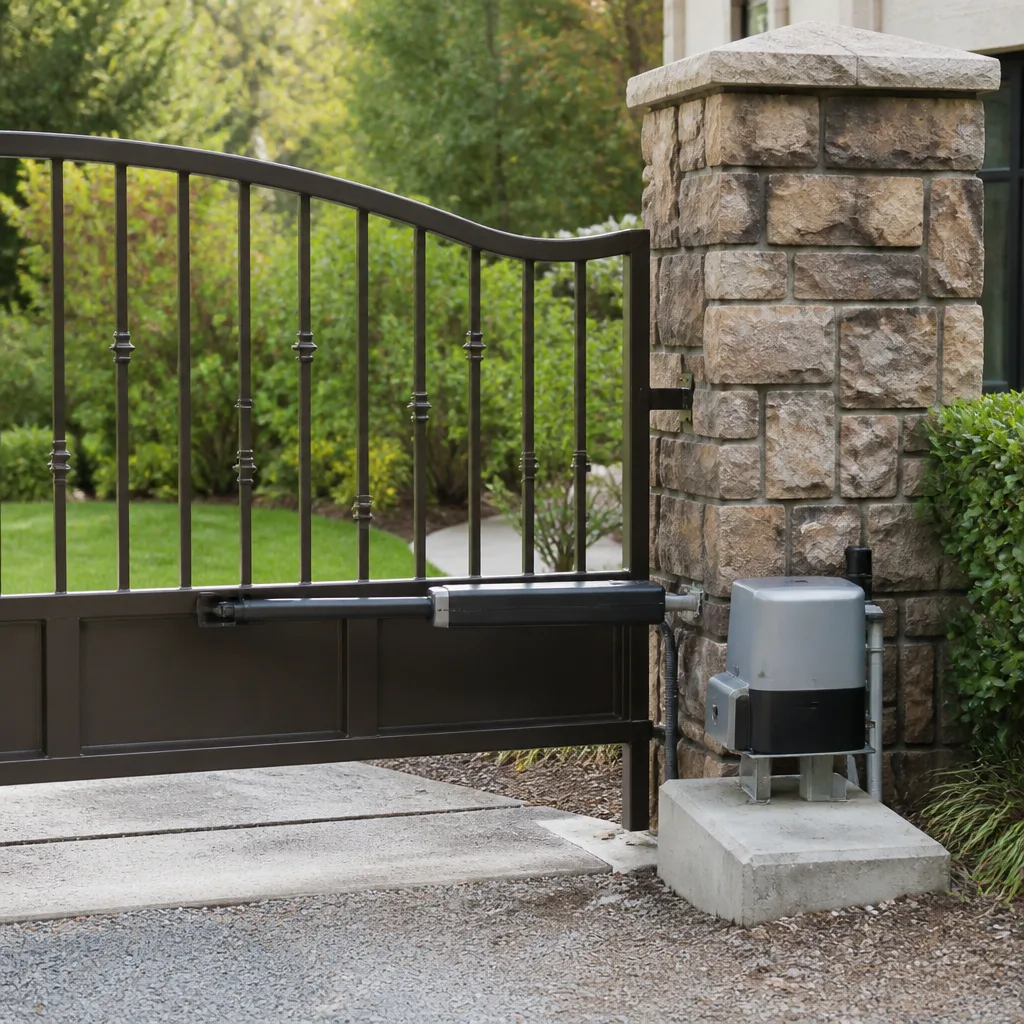
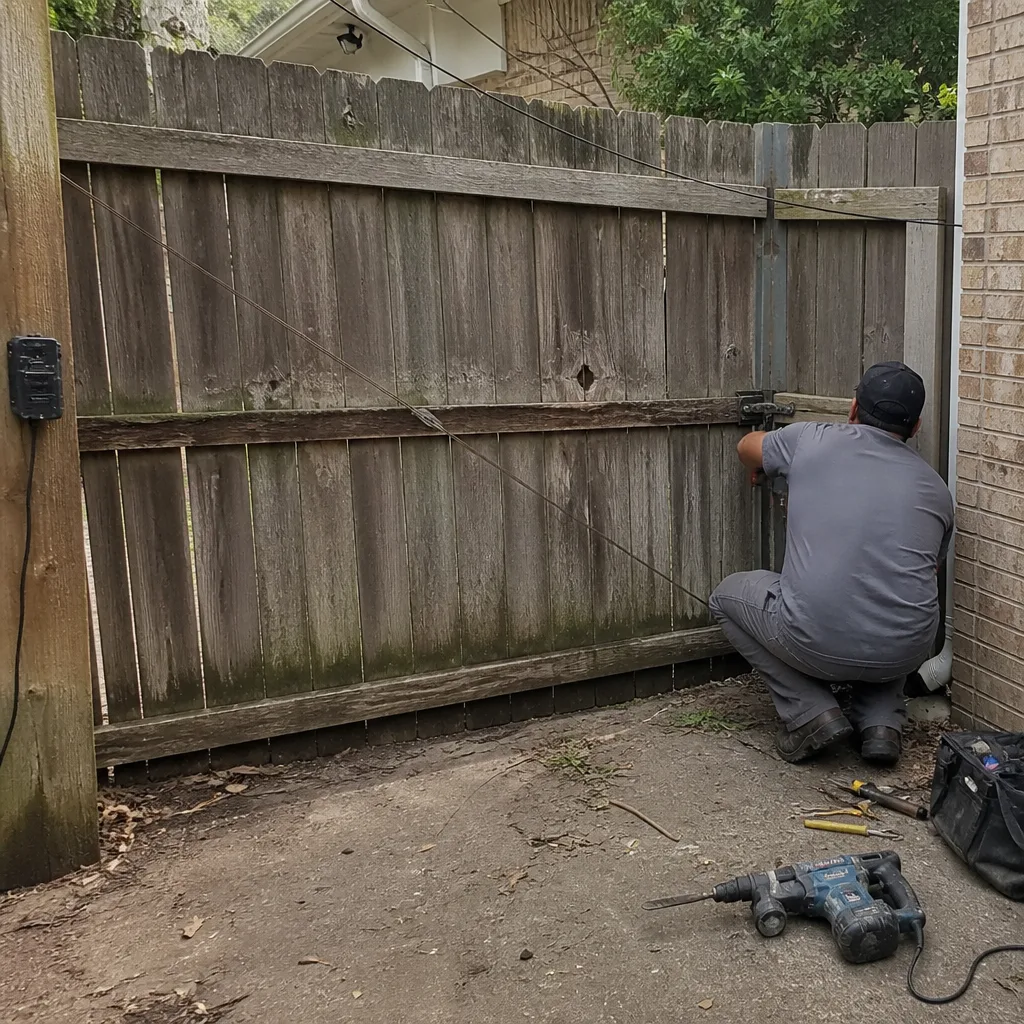 Before
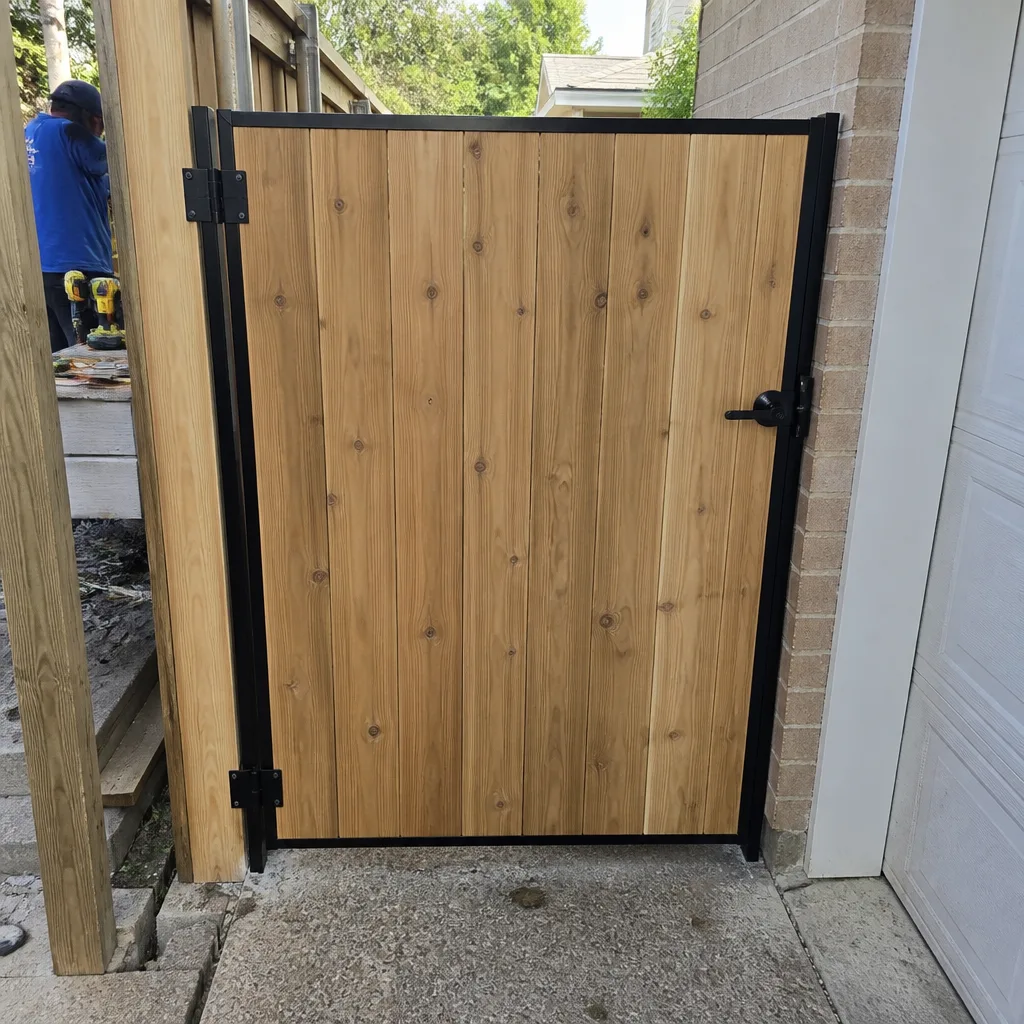 After
After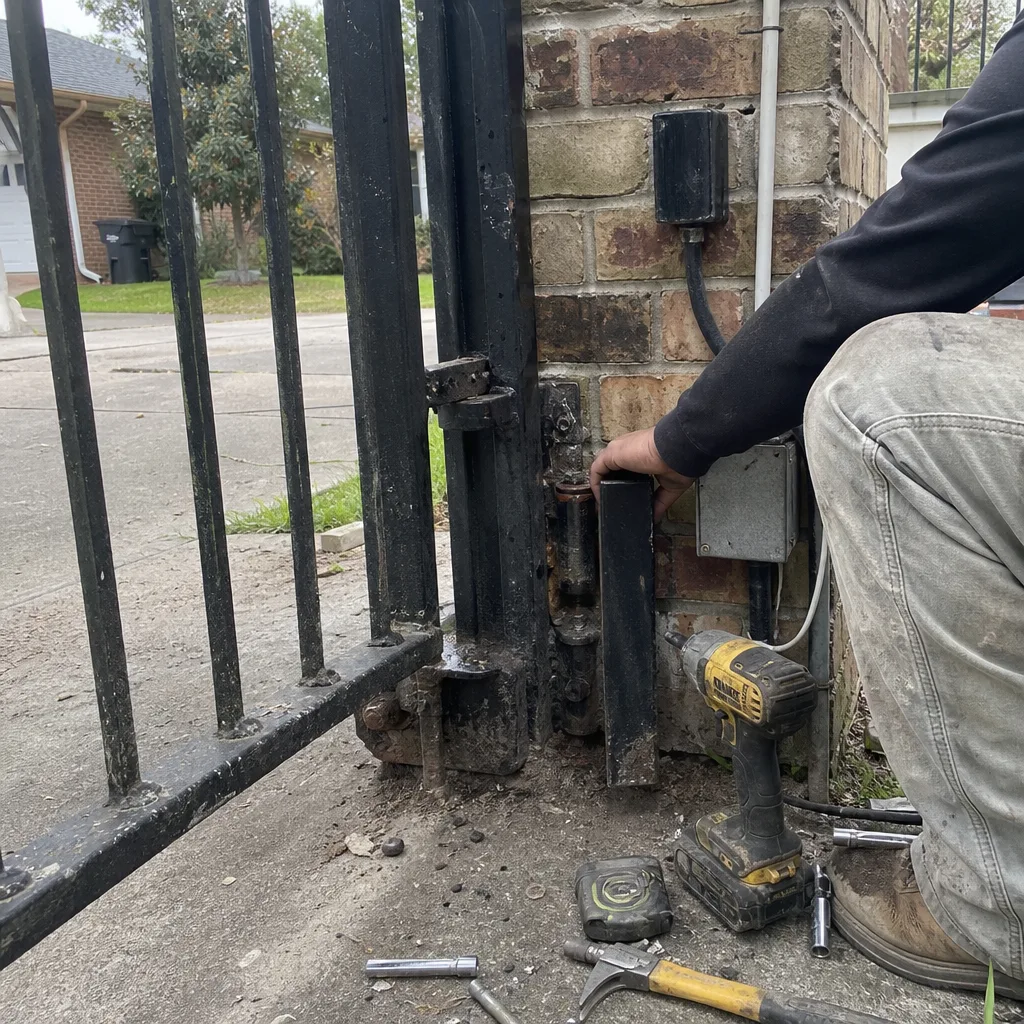 Before
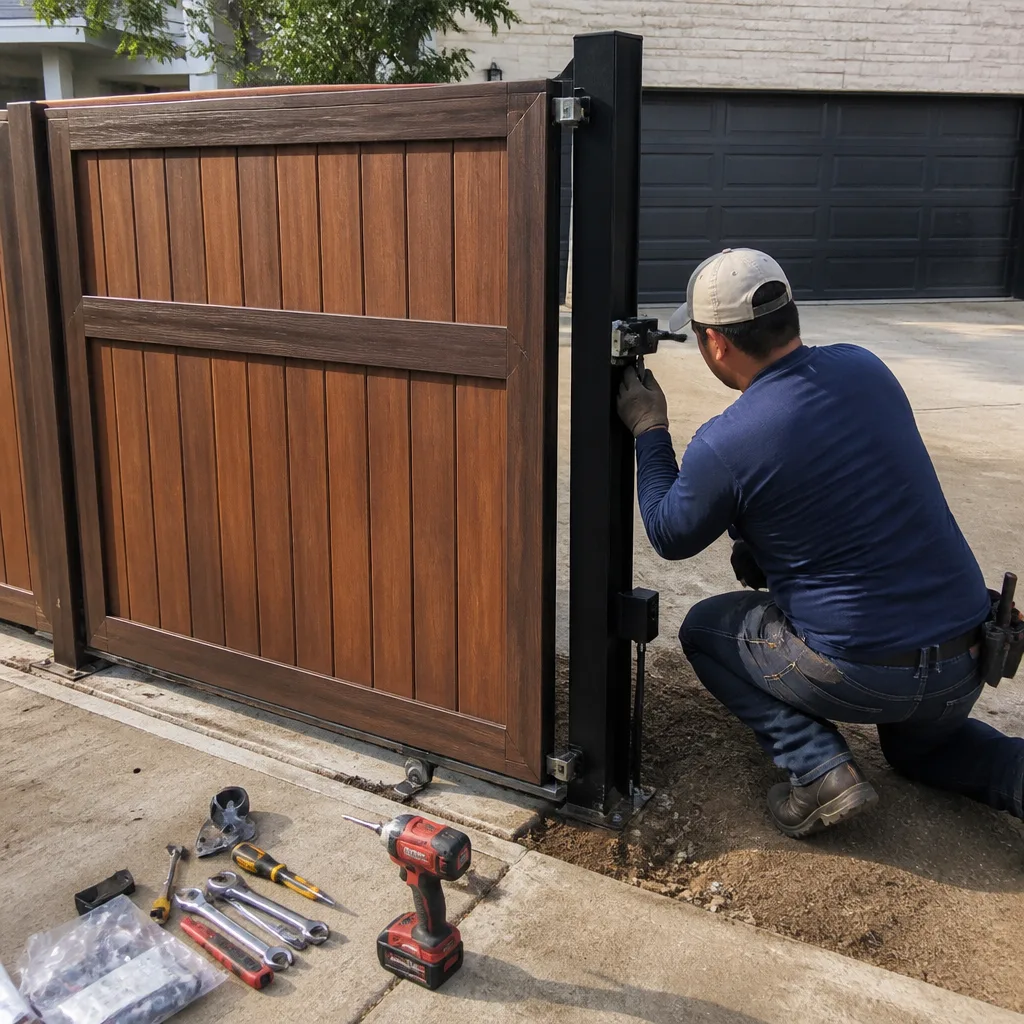 After
After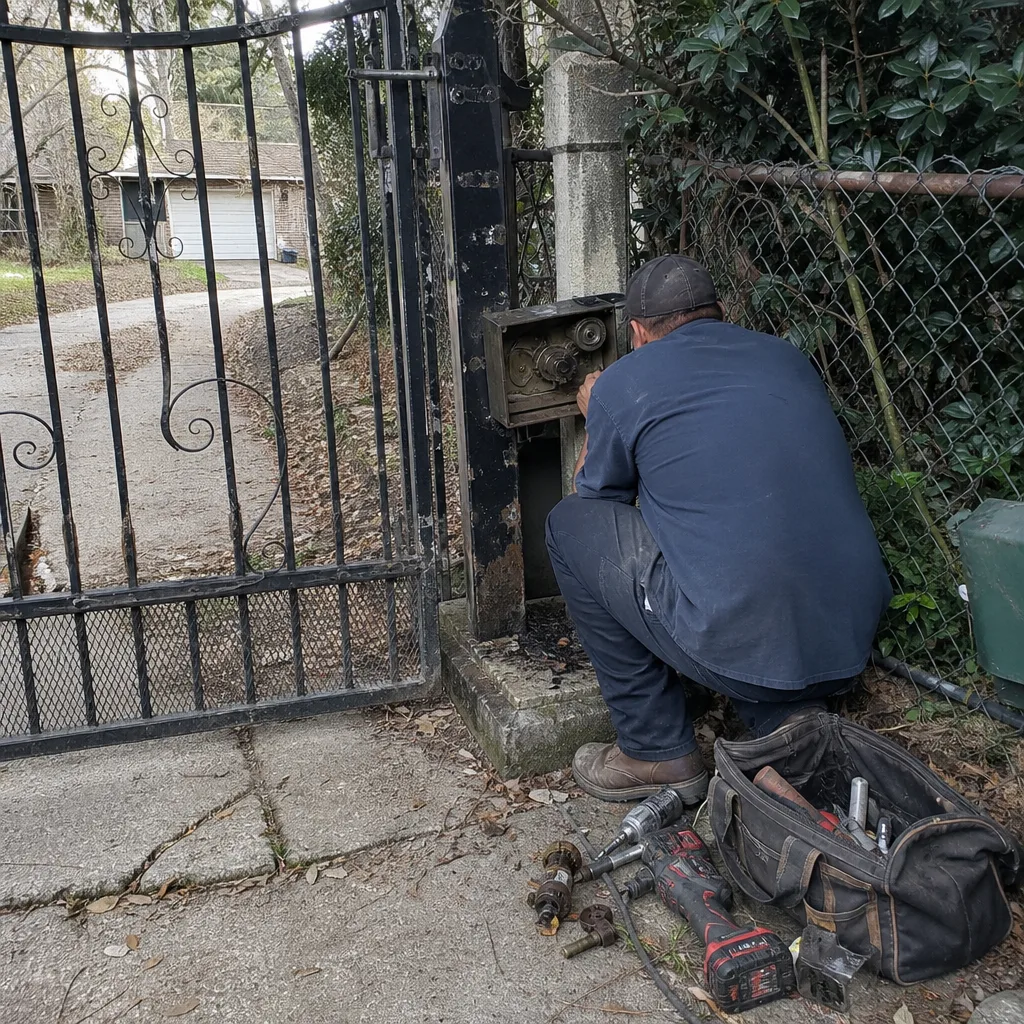 Before
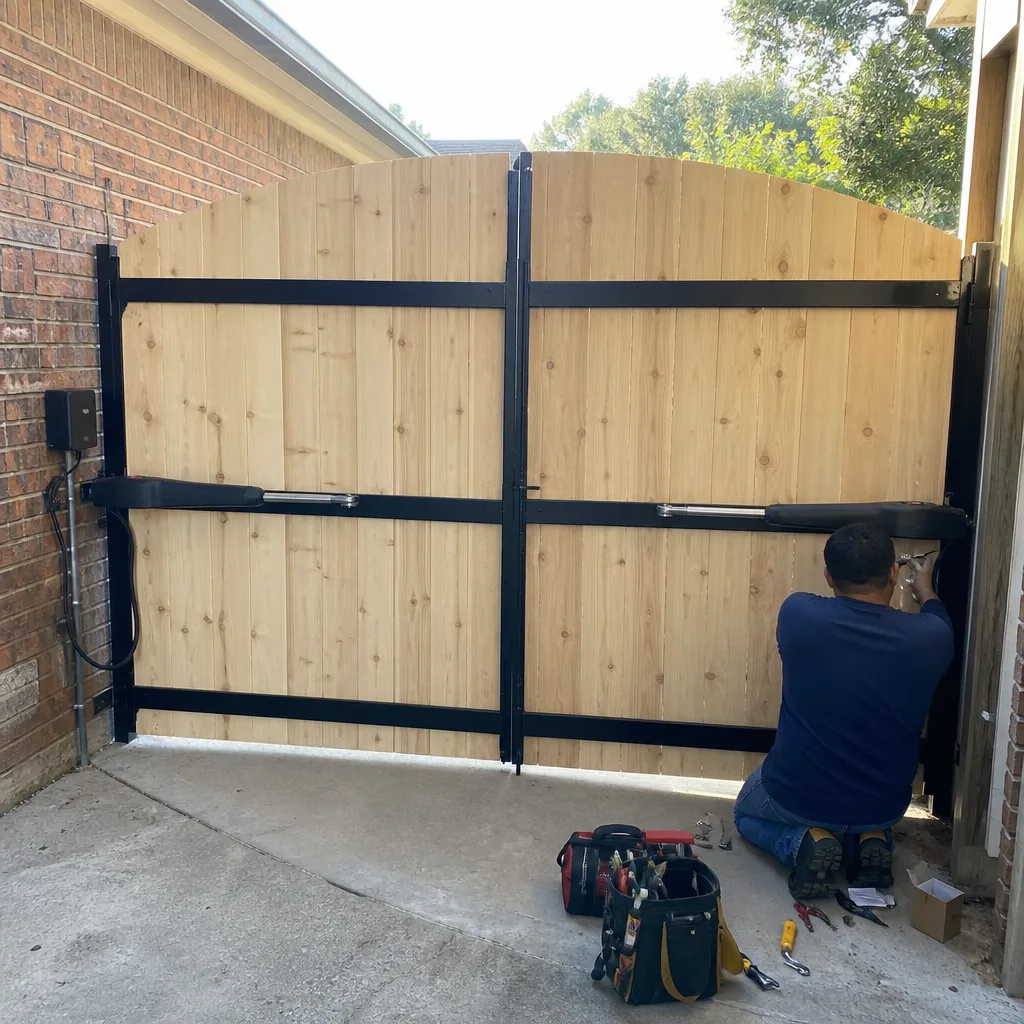 After
AfterSeasonal Gate Repair Care for League City: Year-Round Homeowner’s Guide
Most seasonal maintenance guides for automatic gates assume a calendar that doesn’t exist in League City. They warn about October snow loads and March frost heave. Our climate has no use for that advice. What we actually have is a six-month corrosion window, a battery-killing heat stretch, a named-storm season with its own failure patterns, and maybe ten days a year when cold becomes a genuine factor. This guide is written for the gates sitting between Clear Creek and Dickinson Bayou, where salt air, clay soil, and humidity measured in the high eighties do more damage than every freeze event combined. By the end, you’ll know exactly what to inspect each season, what’s worth paying a technician to handle through our Gate Repair services, and what you can do yourself with twenty minutes and a rag.
Quick Answer
Seasonal gate care in League City breaks into four windows, not four seasons. From April through October, protect control board terminals and wiring connections from humidity-driven corrosion. From June through September, watch solar battery health and capacitor wear. From June through November, inspect the gate after every named storm and heavy rain for debris shifts, operator water intrusion, and misaligned photo-eyes. And from December through February, check limit-switch behavior and hydraulic fluid consistency during brief freeze events. The single most important task across all seasons: keep electrical contacts dry, because corrosion is the number one gate failure we replace in League City year-round.
Table of Contents
- April to October: The Corrosion Season
- June to September: Heat Stress on Gate Batteries and Boards
- June to November: Storm Season Inspections
- December to February: The Brief Freeze Window
- What a Homeowner Can Do in 20 Minutes
- What Belongs to a Technician
- Why Written Documentation Matters Season to Season
- Common Mistakes to Avoid
- When to Call a Professional
- Frequently Asked Questions
- The Bottom Line
BeforeAfterApril to October: The Corrosion Season
League City’s real maintenance season runs from April through October, and it is not about temperature. It is about moisture. Between Galveston Bay, Clear Lake, and the dozens of bayous that thread through this part of Harris and Galveston counties, ambient humidity sits above 80 percent for weeks at a time. Salt content in that moisture accelerates what would otherwise be a slow electrical contact failure. Here is what that means for a gate system on your property.
What Humidity Does to Control Boards and Terminals
Automatic gate operators live in metal or plastic enclosures. Those enclosures are rarely airtight. Every day, humid air moves in and out with the temperature swing, and every cycle deposits a faint film of moisture on circuit board traces and wire terminals. Over a three-month stretch, that film becomes visible green or black corrosion on copper contacts. The control board inside the gate operator at a home off FM 518 will fail the same way one near Bay Colony or South Shore Harbour fails: a terminal contact oxidizes, resistance climbs, the board’s logic reads an intermittent signal, and one day the gate refuses to open or settles into a permanently open state. We replace control boards in League City every week during the summer for exactly this pattern.
Where to look if you want to catch it early: the low-voltage terminal strip where the keypad, push button, and safety edge wire land. Those small screw terminals are the first to go because they carry only a few volts and tiny currents. The corrosion does not have to be dramatic. A dull gray haze is enough to break a circuit. When we open a control enclosure in League City during July, we photograph every terminal position before touching a tool. Then we clean what needs cleaning and photograph it again. You should see what we see. That same documented record is the standard on every Gate Repair in League City job we complete.
Corrosion’s Favorite Targets, In Order
- Push-button and keypad wire terminals on the control board. Low voltage, high sensitivity, first to fail.
- Photo-eye connectors in the round plug at the base of the sensor housing. Rainwater wicks in around the cable.
- Battery terminals on solar and backup-battery systems. Acid film and humidity combine.
- Limit switch contacts inside the operator housing on mechanical units. Even sealed switches suffer film buildup.
- Ground lugs and earth bonding points. Losing the gate’s ground creates stray current paths that damage boards.
Prevention is not complicated, but it is specific. A small packet of desiccant or a corrosion-inhibiting electrical spray applied to terminal strips every spring does more for gate reliability than anything else a homeowner can do. If you are not comfortable opening the enclosure, a technician can perform this work as part of a routine visit. Either way, once June starts, the corrosion clock is running.
What Homeowners Can Do
- Open the control enclosure on both the gate operator and any external keypad every April. Look for white, green, or black film on any metal contact.
- Wipe the inside of the enclosure with a dry microfiber cloth. Do not use water or solvent.
- Check that the door gasket is seated properly and the screws are snug. Replace a dried or cracked gasket.
- Look underneath the operator for standing water marks or rust streaking after any heavy rain.
June to September: Heat Stress on Gate Batteries and Boards
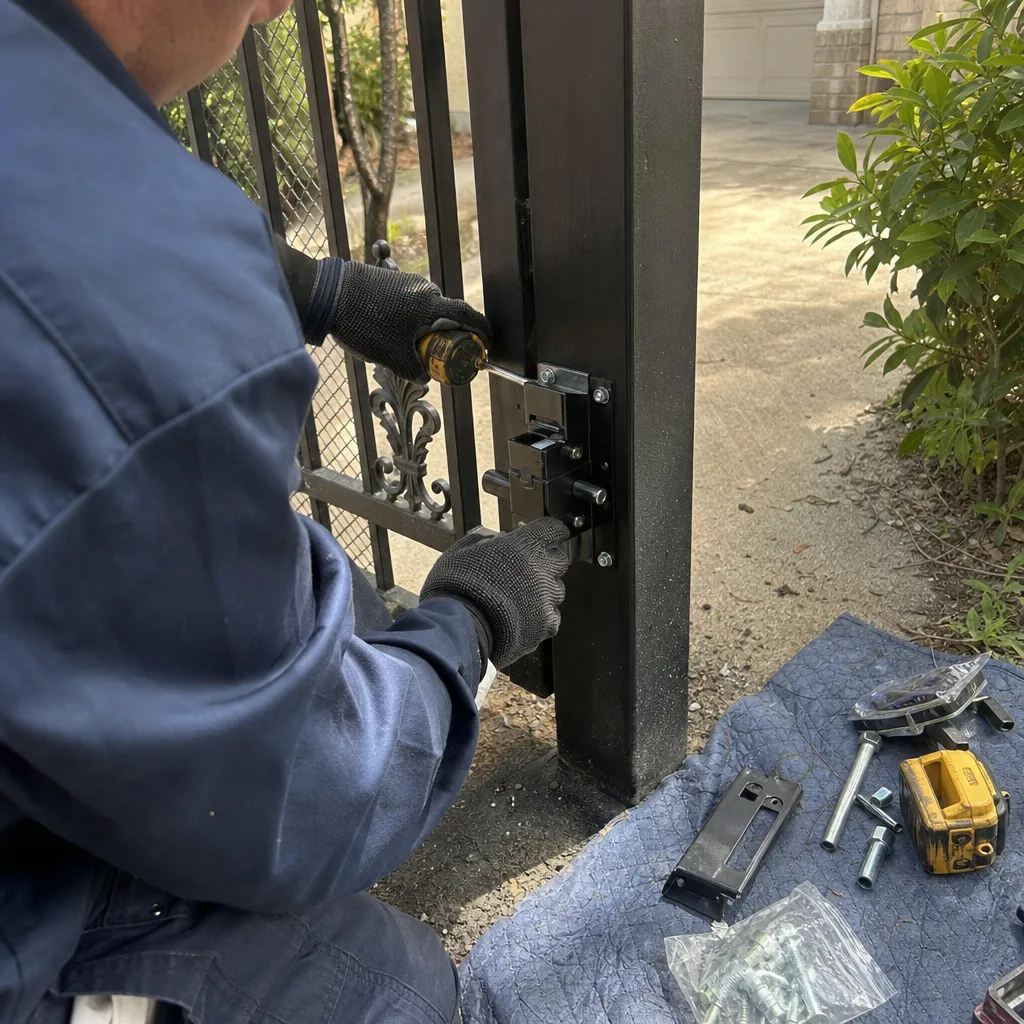
If corrosion is the slow killer, heat is the fast one. From mid-June through mid-September, League City temperatures routinely clear 95 degrees at the hottest part of the day. A gate operator sitting in direct sun holds more heat than the air around it. Inside that enclosure, you have two failure modes: battery chemistry breakdown on solar or backup systems, and capacitor degradation on control boards. Either one can take a gate down without warning.
The Solar Battery Problem Nobody Notices Until August
A solar-powered gate battery can test perfectly fine in March and fail outright in August. The reason is chemical. Lead-acid and AGM batteries lose service life on a curve that heat accelerates. Every sustained stretch above 90 degrees shortens the battery’s capacity permanently. That capacity loss is invisible on a simple voltage test. A 12-volt battery reads 12.6 volts and still cannot deliver enough current to move a heavy gate leaf. Homeowners discover this the hard way on a Saturday afternoon in August when the gate opens half way and stops. In our experience across League City, solar gate systems on western-facing fence lines fail fastest, because the panel charges the battery while the afternoon sun bakes it. The heat both charges and cooks.
Testing for this requires a load test, not a voltmeter check. Some homeowners own a load tester and know how to use it. Most do not. The practical takeaway: if your solar gate has been installed for three or more years and is exposed to afternoon sun, replace the battery proactively before summer peak. The cost of a replacement battery is far less than the cost of a new control board after a battery short. Battery replacement is part of every Gate Motor & Opener in League City service we provide, and we always write the price for the battery and labor before we start.
Capacitors and Board Lifespan in League City Heat
Control board capacitors fail faster in high-heat environments. We see it across every operator brand we service: Linear, Viking, Ghost Controls, DoorKing, all of them use capacitors in the power supply section, and all of them age faster in a sun-baked enclosure near Dickinson or along 646. A failing capacitor shows up as a gate that begins moving then stops, or a remote control receiver that loses range, or an operator that intermittently refuses to close. Often these are the first signs a board is failing before it fails completely. A technician with a meter can spot a swollen capacitor before it takes the board down. That is one of several reasons we recommend an annual inspection before the hottest stretch of summer begins, not after it ends.
Shading and Ventilation Help
- Get the enclosure out of direct sun. A simple shade panel or repositioning the operator on the post reduces internal temperatures dramatically on afternoon-facing gates.
- Make sure the enclosure vents are not painted over or clogged with dirt. Manual vents and hooded vents must stay clear.
- Keep vegetation back. A fence line covered in climbing vines traps heat and moisture against the operator.
June to November: Storm Season Inspections
League City storm season means two different inspection routines, and they are not the same. A routine heavy rain, which we get dozens of times between May and September, calls for one set of checks. A named storm, or even a violent thunderstorm with 60 mph gusts, calls for another. Failure points differ, and so does the urgency.
After a Routine Heavy Rain
- Check the photo-eye lenses. Rain splash covers them with mud and road film. Wipe both lenses with a dry cloth. Misaligned or dirty photo-eyes are the most common reason a gate refuses to close after a storm.
- Check the gate track for debris. Coconut husks, sticks, blown plastic bags, and mulch all end up in slide gate tracks in League City. Look for anything the gate must roll over or through.
- Inspect the operator enclosure for water entry. Look for fogging inside the enclosure window, water beads on the board, or rust staining under the controller. A little moisture inside is a problem, not a curiosity.
- Watch one full cycle. Send the gate open, then close. Listen for grinding, bumping, or hesitation. If the gate moves slower than before, make a note.
After a Named Storm or Severe Weather Event
Named storms bring four problems routine rain does not. The first is debris impact. Gates get hit by flying branches, shifted patio furniture, and blown fencing. That impact bends gate frames, breaks weld joints on brackets, and knocks limit switches out of position. The second is ground movement. Saturated clay soil in League City expands dramatically. A concrete gate post that was plumb in July may be out of plumb in September after a tropical system drops eight inches of rain in two days. The gate no longer closes square, and the operator now pushes against a bind. The third is electrical surge damage. Lightning and grid instability during severe weather take out boards and transformers with no visible damage. The fourth is insect displacement. Fire ants and other ground-dwelling pests abandon flooded soil and move into clean, dry enclosures. We have opened more than one operator housing after a named storm to find the terminal strip covered in ants.
After a named storm, the sequence should be:
- Visually inspect the entire gate, posts, and hinges for bends or cracks before operating it.
- Manually disengage the operator and move the gate by hand to check for binding or dragging.
- Open the operator enclosure and photograph the board and terminals before testing anything.
- Test open and close cycle, watching for incorrect travel limits, slow movement, or reversed safety response.
- Check the ground around each gate post for new cracks or gaps that indicate shifting soil.
If the gate survived a named storm but something feels different, the right move is to have it inspected. In League City, storm-season damage is rarely just cosmetic.
December to February: The Brief Freeze Window
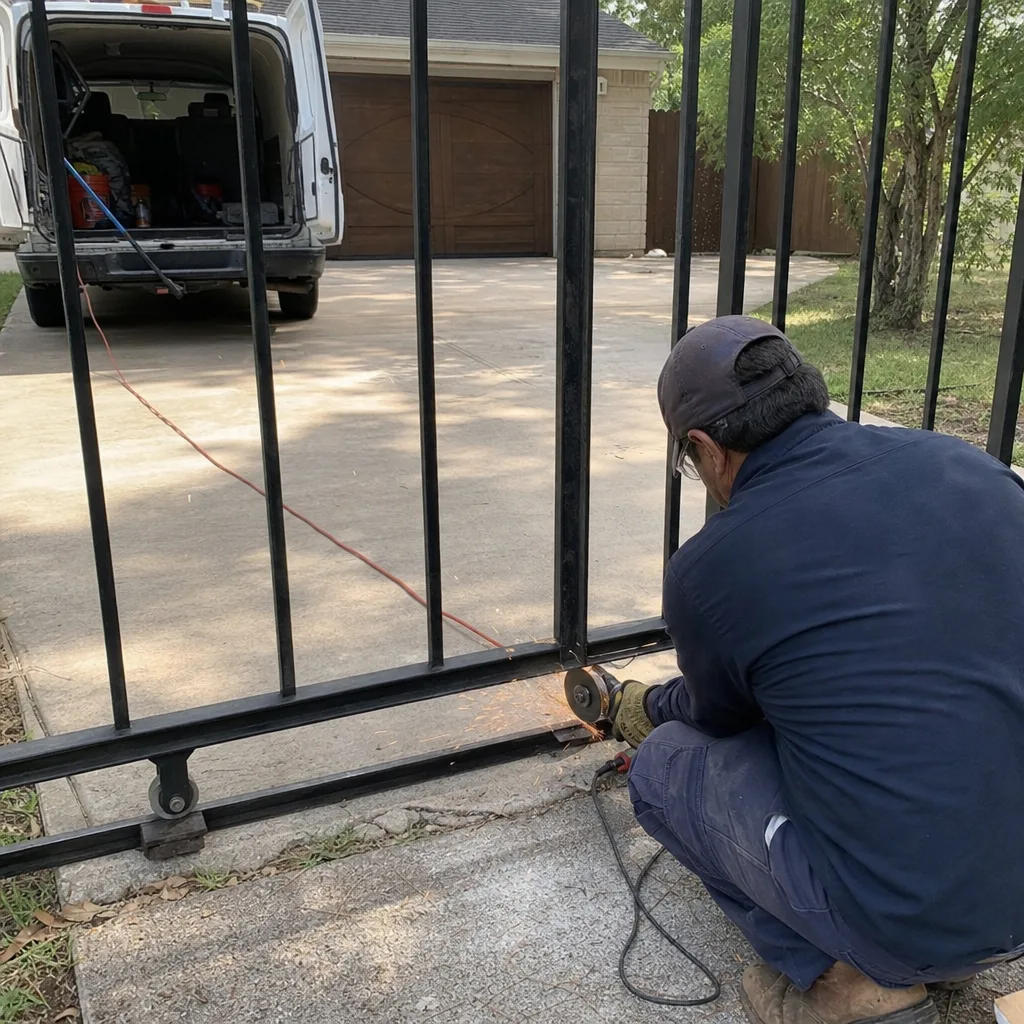
League City freezes for perhaps ten to fifteen days a year, usually in January and February, in short overnight snaps. The freeze itself is not the primary threat. The primary threats are three specific behaviors that only show up in cold, and they are missed by homeowners almost every time.
Limit-Switch Drift in Cold
Mechanical limit switches move slightly in cold. Metal contracts, lubricant thickens, and the switch gear shifts a few degrees. That shift changes where the gate thinks it should stop. The result is a gate that slams into the post, or stops three inches short of closed and backs off. If your gate runs perfectly all summer and starts slamming or stuttering in January, the limit switch is the first thing to inspect. Do not simply tighten or adjust it without understanding where it was. Document the existing position first. On older mechanical operators, a trained technician can set the limit switch to a position that works through both the freeze snap and the warm afternoon that follows.
Hydraulic Fluid Viscosity
Hydraulic gate operators, common on heavier iron gates and many driveway gates in League City’s older established neighborhoods, use fluid to move the gate. Cold thickens that fluid. On a morning when the temperature drops into the low 30s or below, a hydraulic operator may move sluggishly for the first one or two cycles, then normalize. Homeowners mistake this for a failing motor and sometimes replace an operator that simply needs a fluid service. Checking viscosity and fluid level is a seasonal task for any hydraulic unit. The fluid should be clear and at the correct level. Dark or milky fluid has been contaminated and should be changed before the cold window, not during it.
Battery Backup Systems
Cold reduces battery output at the same moment a freeze event makes power outages more likely. A battery backup that handles one cycle fine at 80 degrees may fail to deliver enough current at 30 degrees. This shows up as a gate that moves slowly on backup power, or an alarm that sounds and then resets. The fix is preventive: load-test the backup battery in November, before the freeze window begins. If it is marginal, replace it. We recommend testing backup batteries as part of a fall inspection, and we write down the measured result so you can compare it next year. A battery that is slowly declining tells you a lot if you have the readings written down.
What a Homeowner Can Do in 20 Minutes
Not everything on this list requires a service call. Some maintenance tasks are simple enough to do yourself if you are methodical and careful. These take about twenty minutes and need nothing more than a rag, a multimeter, and a can of electrical contact cleaner.
- Wipe down photo-eye lenses. Both sides. Every storm, and at least once per month during summer. Ten seconds, saves a service call.
- Test the gate’s obstruction reversal. Place a cardboard box in the path and close the gate. It should stop and reverse. Do this monthly. This is a safety circuit, not a convenience. If it fails, that is a call for a technician.
- Check all visible wiring. Look for cracked insulation, green corrosion at connections, or wires pulled loose from the terminal strip. You are looking, not fixing.
- Clean the track for the slide gate. Remove debris with a broom or your hands. Never use a pressure washer near the operator.
- Measure and record battery voltage on solar or backup systems with a multimeter. Write the number down with the date. A log of readings tells you when the battery is trending down before it fails.
- Listen to one full cycle. Know what your gate sounds like when it is healthy. Grinding, clicking, buzzing, or hesitation are the early warning system.
For any task involving the high-tension components of a gate system, our advice is consistent. Do not attempt to adjust or remove torsion springs, extension springs, or tension cables yourself. These parts are under enough pressure to cause severe injury or death if they let loose. The same goes for any electrical work beyond visual inspection and voltage measurement. Call a trained technician. We would rather schedule a free estimate than have a homeowner in League City hurt trying to save a service fee.
What Belongs to a Technician
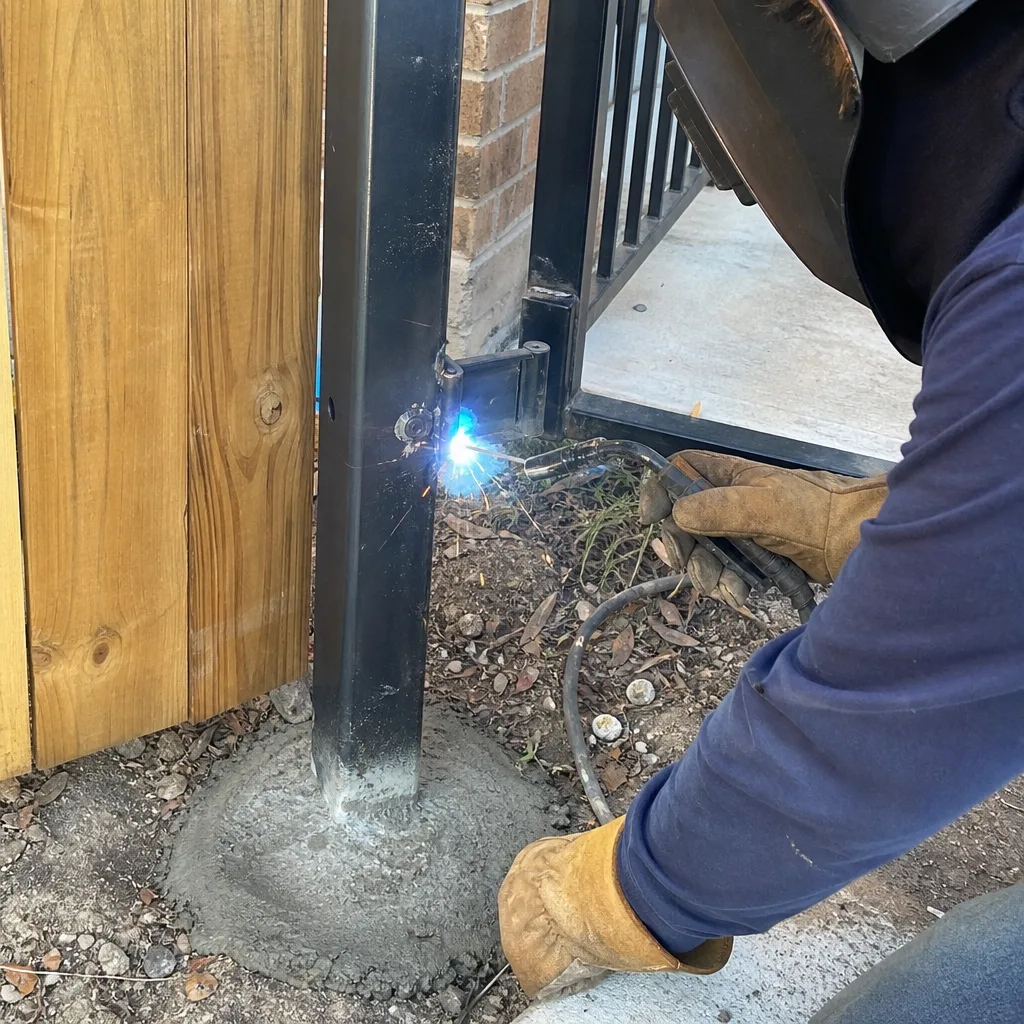
Some seasonal tasks require a licensed professional, full stop. The reason is not always danger, though danger is part of it. Often the reason is that the task requires calibration against manufacturer specifications, and doing it wrong creates a safety hazard that is invisible until something goes wrong.
- Limit switch calibration. Setting the gate’s stop points too far open slams the gate. Too far closed burns the motor. This is precision work.
- Circuit board repair or replacement. Board-level work requires proper grounding procedures and metering. A misdiagnosed board replacement is an expensive guess.
- Battery replacement on a solar or backup system. Battery chemistry matters. The wrong replacement can damage the charging circuit. Plus, it often requires a load test to confirm the root cause.
- Hydraulic fluid changes and hose replacement. Fluid under pressure and hot manifolds. Not a DIY task.
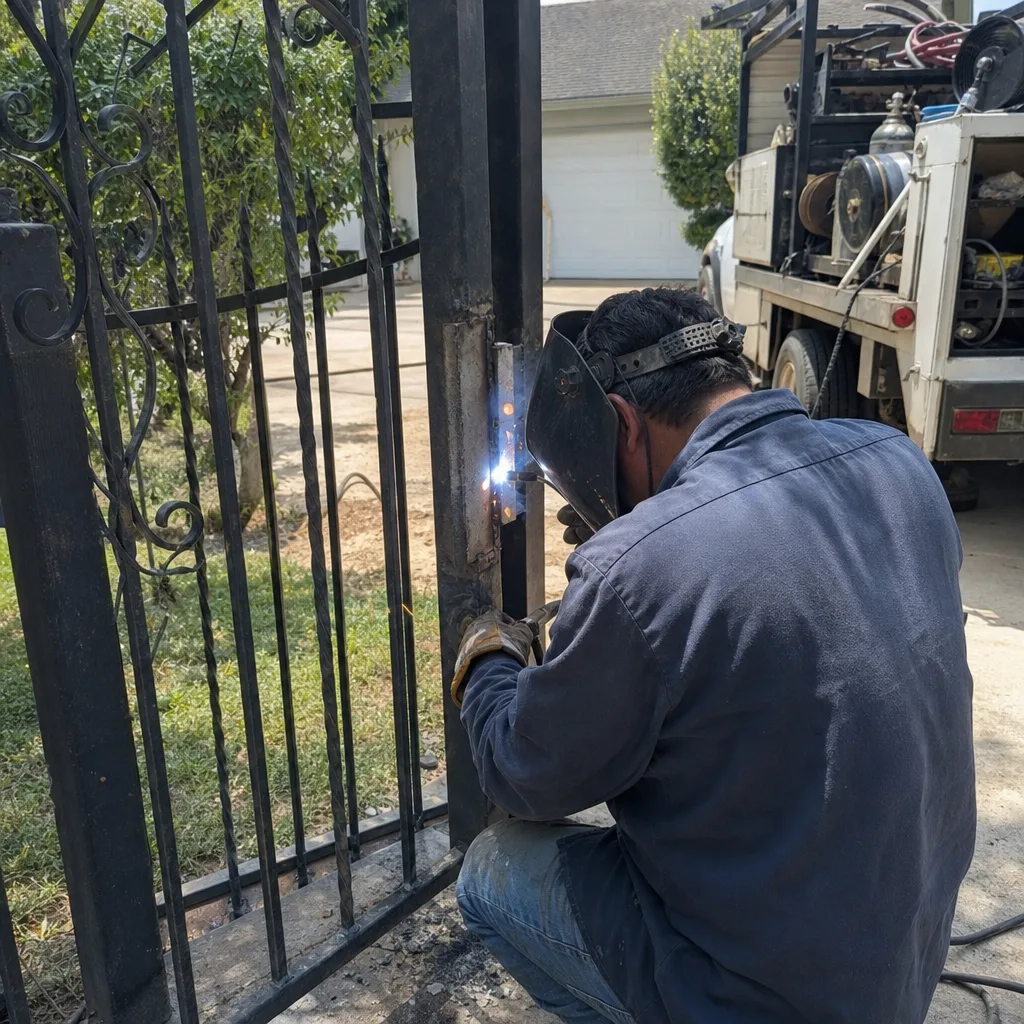
- Weld repairs on gate frames and hinge brackets. A bad weld fails without warning and a falling gate is a lethal hazard.
- Any repair involving the safety edge or photo-eye alignment. These are safety circuits. If they are misaligned or bypassed, the gate can close on a person or vehicle. We treat every safety circuit repair as critical work.
The pattern here is simple. You can clean, you can inspect, you can measure, and you can document. You should not adjust, repair, or replace anything that carries high tension or operates a safety function. The better documentation you keep, the easier the technician’s job. Gate Installation in League City follows the same rule when we build a new system: the safety circuits are engineered, not improvised.
Why Written Documentation Matters Season to Season
We built our company on a habit that began with commercial access-control work in 2014. On commercial sites, every visit generates a work order, a wiring diagram update, and a photo record. The same access card system serves a residential driveway gate. So Adrian Vance decided residential customers should receive the same paperwork. We named the protocol the Haven Standard, and this is what it means, clause by clause, applied to seasonal care.
Clause 1: Have it in writing. Before any work begins, you get a written scope and a written price. You know what we will do and you know what it costs. Seasonal inspection, battery replacement, limit-switch adjustment, storm repair: the price is handed to you before a tool is picked up. Nothing about that changes with the calendar.
Clause 2: Evidence on every job. Every visit includes a documented photo record: what we found, what we adjusted, and what we replaced. You keep the photos. We file them in the job record. Next season, when the same gate is inspected again, the new technician is not guessing about what was done in June. The record shows it. When our team handles Gate Motor & Opener in League City work, that record includes the reading on the limit switch before and after adjustment.
Clause 3: Make it right. The 365-Day Done Right Promise covers every completed repair for a full year. If a repair is not right, we make it right. No charge. No argument. If a capacitor we replaced in July fails in October, we return and replace it at no cost.
The practical advantage for a League City homeowner is twofold. First, the documented record means seasonal maintenance stops being guesswork. You have a paper trail of what was changed and when. Second, a written price before work starts means the final invoice matches the quote. There are no seasonal surprises waiting at the end of the visit. You should expect that from any gate company. If you are not getting it, you are getting less than the industry’s better standard.
Common Mistakes to Avoid
- Waiting until August to test a solar battery. By the time the heat has fully stressed a battery, the damage is done. Test in April and May when you can still schedule a replacement before the peak heat arrives.
- Cleaning photo-eyes only when the gate stops working. Dirty eyes produce intermittent behavior for weeks before complete failure. Wipe them after every heavy rain, on schedule.
- Ignoring a gate that runs slightly slower than it did last month. Slowing movement on an electromechanical operator is often a capacitor or motor issue. Early intervention saves the board. Waiting guarantees a bigger repair bill. This is the most common pattern we see on gates throughout League City.
- Pressure-washing the gate and operator enclosure. The stream forces water past gaskets and into terminals. Use a hose with a spray nozzle, and never direct water at the enclosure. Even better, use a damp cloth and a bucket.
- Assuming a gate that survived a named storm unscathed needs no attention. Hidden issues from a storm often appear two to three weeks later, after soil settles and materials relax. Schedule a post-storm inspection even if everything looks fine.
- Skipping the annual fall load test on the backup battery. A backup system that has never been load-tested is not a backup system. It is a hope. We load-test every backup battery as part of our annual inspection.
- Trying to adjust spring tension or replace cables without training. Torsion and extension springs hold enough force to seriously injure someone. This is not a weekend project. We cannot say it strongly enough: call a professional.
When to Call a Professional
Call a professional if the gate slams into the post, stops three inches short of closed, opens halfway and stops, or reverses for no visible reason. Call if the photo-eyes are misaligned and the gate refuses to close. Call if you open the control enclosure and see green corrosion, burned marks, melted insulation, or ants. Call if the gate has been damaged by a storm and the posts are no longer plumb. Call if the backup battery has never been load-tested. And call if any repair involves springs, cables, or safety circuits. Vance Gate Repair League City offers free estimates in League City, and a live person answers the phone 24 hours a day, seven days a week. For DIY vs Professional Gate Repair: The League City Homeowner’s Decision Guide, see our resources. Call (346) 787-1751. The estimate is written before any work begins, and the price on the estimate is the price you pay.
Frequently Asked Questions
Once a year is the minimum for a well-maintained gate, but we recommend two inspections: one in April before the summer heat begins, and one in October before the freeze window. The April inspection focuses on corrosion, battery health, and control board condition. The October inspection focuses on limit switches, hydraulic fluid, and backup battery readiness. In League City, that twice-a-year cadence catches problems before they become urgent. Call (346) 787-1751 to schedule either one. The price for an inspection is written and agreed before we start.
A basic seasonal inspection and tune-up on a standard residential gate in League City typically runs between $125 and $225, depending on the type of operator and how much cleaning and adjustment is required. Battery replacement, board repair, limit-switch calibration, and hydraulic fluid changes each add cost, and those costs depend on the parts involved and the operator brand. DoorKing, Linear, and Viking units all have different board prices. What we can tell you before visiting: every price is written and handed over before any work begins, and the estimate is free once you call (346) 787-1751.
You can and should do the simple tasks yourself: clean photo-eye lenses, inspect visible wiring, clear slide-gate tracks, check for corrosion, and log battery voltages. You should not attempt spring tension, cable replacement, limit-switch adjustment, board repair, or safety circuit work. Those tasks require training, tools, and in some cases specialized calibrations. The line between a homeowner task and a technician task is not about inconvenience. It is about safety and doing the job right the first time.
Heat is the reason. A solar panel produces charging current, but the battery sitting in a hot enclosure loses capacity faster than the panel can replace it. The charging circuit on many solar operators also reduces charge rate at high temperatures as a protective measure. The result is a battery that passes a voltage check but fails under load. We see this pattern every August across League City. A battery that is three or more years old and exposed to afternoon heat should be load-tested before the hottest part of summer begins.
After a severe storm in League City, check the gate for bent frames and cracked welds, manually disengage the operator and check for binding, open the enclosure and photograph the board, test one full open and close cycle, and look for soil gaps around the posts. These five steps cover the most common storm failure points: impact damage, ground movement, water intrusion, electronic surge damage, and displaced pests. If anything shows up, call (346) 787-1751. Storm inspections are free to schedule, and we will write down exactly what we find.
Yes. We service nine major automation brands, including DoorKing, Linear, Viking, Ghost Controls, and others. We work on whatever motor is already installed on the property rather than steering you toward a replacement. That matters season to season, because the maintenance needs of a hydraulic Viking operator are different from those of a solar Ghost Controls unit. Knowing the brand lets us bring the right parts and diagnostic tools the first time. If you are unsure what brand your gate operator is, we will identify it during the initial inspection.
The Bottom Line
League City gates fail in patterns that line up with our climate, not with the northern calendar. The corrosion season runs from April to October. The heat-stress season runs from June to September. The storm season runs from June to November. The freeze window is brief but specific, and it punishes neglect of limit switches, hydraulic fluid, and backup batteries. The homeowners who avoid the most expensive repairs are the ones who inspect in April and October, document what they find, and call before a small problem becomes a board failure or a bent gate post. See The Complete Guide to Gate Repair in League City for a full breakdown. The price should always be in writing before the work starts. If it is not, find a different gate company.
Written by Adrian Vance, Owner at Vance Gate Repair League City, serving League City since 2014. Explore more guides & resources on our blog.
For gate repair, installation, motor service, or a seasonal inspection, call Vance Gate Repair League City home at (346) 787-1751. A live person answers, and your written estimate is free.